
The engine loses power, the fuel gauge is on empty, and traffic continues passing only a few feet away. A gas station may appear close enough to reach on foot. The difficult part is not estimating the distance. It is deciding whether leaving the vehicle would expose you to traffic, heat, rain, poor visibility, or a roadside environment with no protected walking route.
For a driver stranded in West Palm Beach or elsewhere in Palm Beach County, requesting fuel delivery is often the safer process. The provider comes to the disabled vehicle with an appropriate container, adds enough fuel to attempt a restart, and helps determine whether the vehicle can leave under its own power or needs towing.
Before the problem: make an empty tank easier to handle
Fuel emergencies become harder when the driver has no reliable location information, a nearly discharged phone, or no plan for requesting help. Before driving, especially during South Florida heat or unsettled weather, a few preparations can reduce roadside exposure:
- Keep a phone charging cable in the vehicle.
- Know how to share your phone's map location without standing outside.
- Store the number for roadside assistance or a local towing provider.
- Do not rely on carrying loose fuel or an unapproved container in the vehicle.
- Respond to a low-fuel warning before entering a route where stopping options are limited.
A low fuel gauge does not always mean a vehicle will travel a predictable additional distance. Traffic, idling, vehicle angle, and gauge accuracy can affect what happens next. If the warning appears, the practical move is to refuel at a safely accessible station rather than planning around the remaining range.
At the roadside: decide whether walking is actually safe
A station being visible does not make it safely walkable. The route may include an unprotected shoulder, driveways, turning traffic, drainage areas, medians, or multiple lanes that must be crossed. On busy roads, drivers may not expect a pedestrian to emerge from beside a disabled vehicle.
Walking also creates a second problem: the vehicle remains unattended. You may need to carry a fuel container back beside moving traffic, and the station may not sell an approved container. Fuel itself adds handling risks if the container leaks, is overfilled, or cannot be secured upright.
Use this roadside decision check
Do not walk for fuel if any of these conditions apply:
- You would have to walk in or immediately beside an active travel lane.
- The route requires crossing fast or heavy traffic without a clearly protected crossing.
- Rain, darkness, road spray, a curve, or roadside vegetation makes you difficult to see.
- There is no continuous, stable place to walk.
- You would be leaving a child, dependent passenger, pet, or vulnerable person alone.
- South Florida heat would make the trip physically risky, particularly without water or shade.
- You are unsure where the station entrance is or whether fuel containers are available.
If the answer is uncertain, treat the route as unsafe. Request roadside fuel delivery and provide the dispatcher with enough information to find the vehicle without requiring you to wait in traffic.
Choose where to wait based on the vehicle's position
If the vehicle is fully outside moving traffic and the surrounding area is stable, remaining inside with the seat belt fastened may reduce exposure. Sit on the side farthest from passing vehicles when practical.
If the vehicle is partly in a travel lane, stopped around a blind approach, or at risk of being struck, staying inside may be more dangerous. Exit only when there is a safe opportunity, move away from traffic, and avoid standing in front of or behind the vehicle. A barrier is useful only if you can reach the protected side without crossing moving lanes.
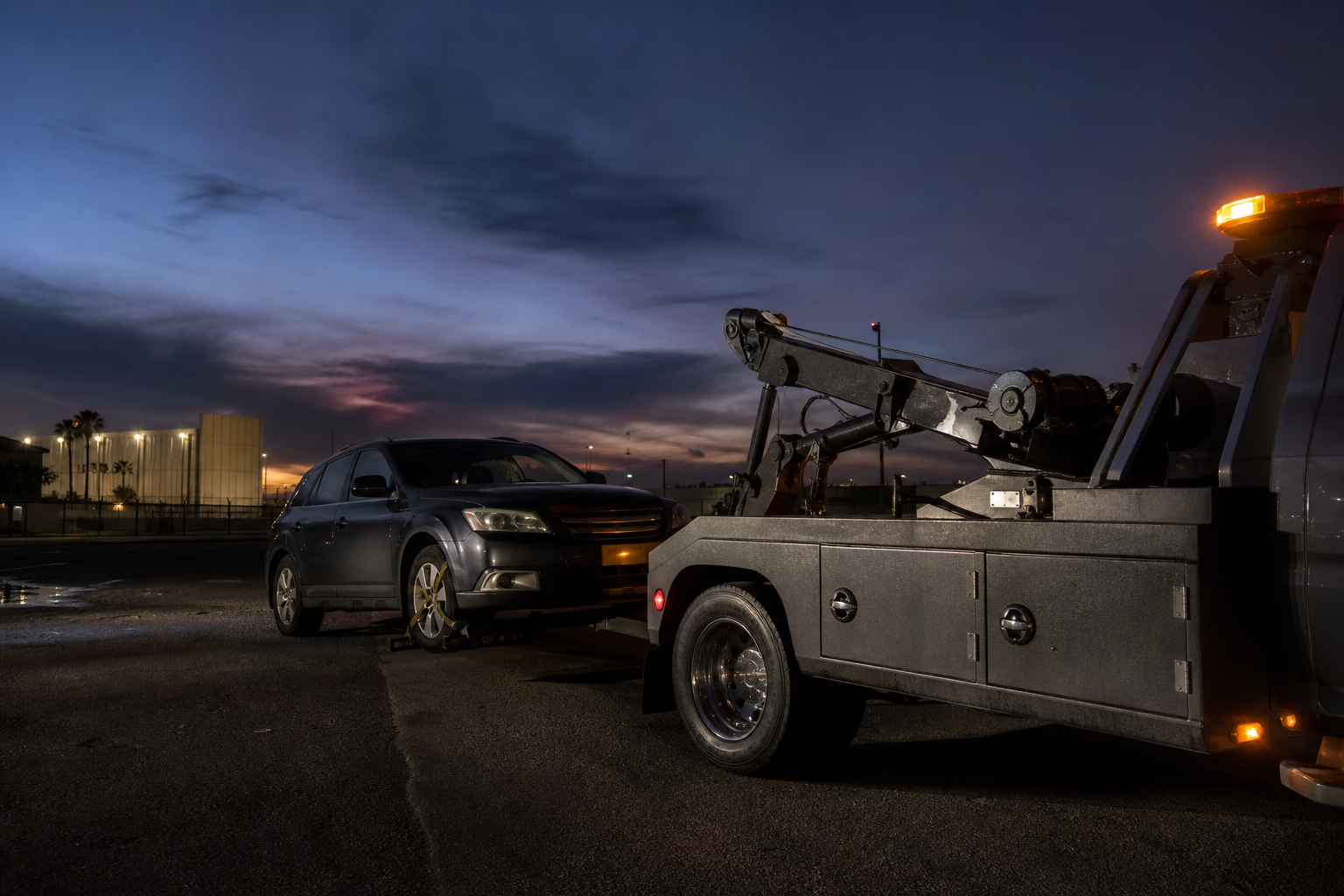
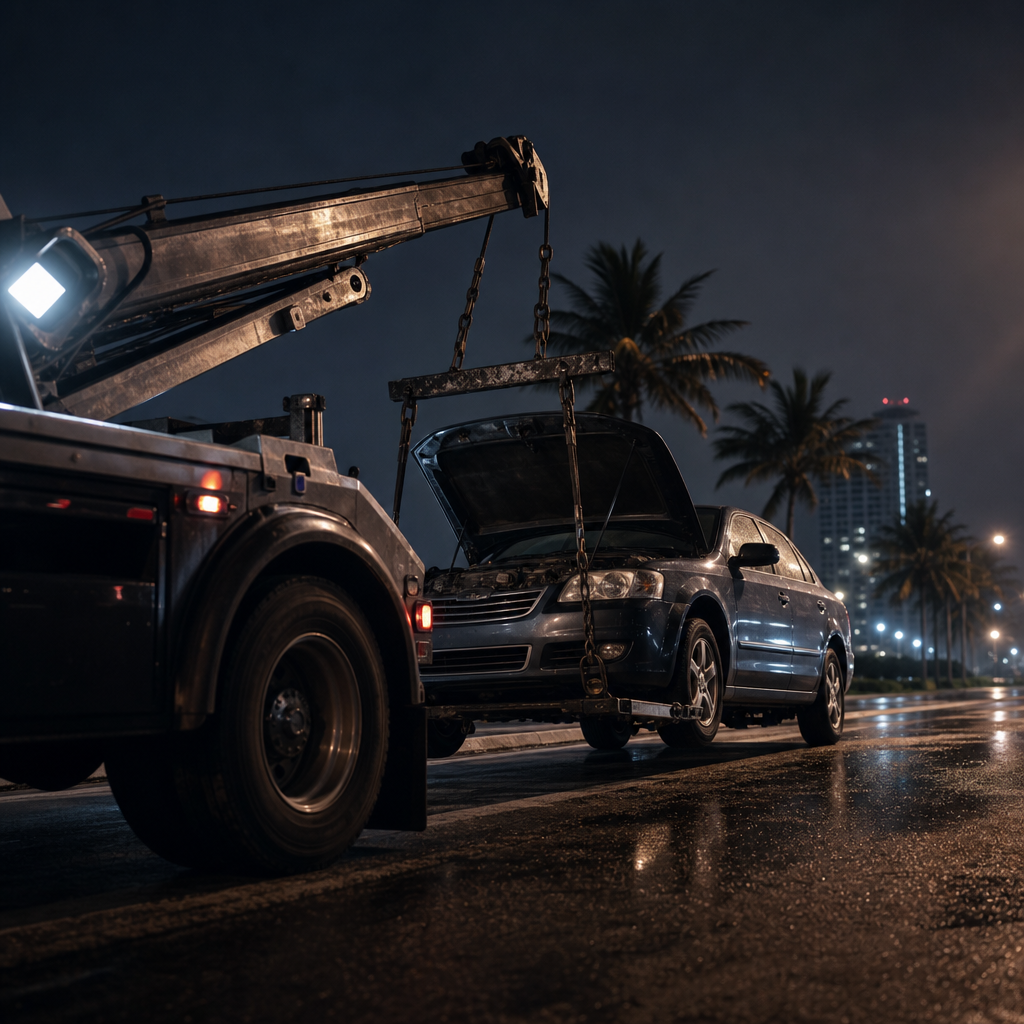
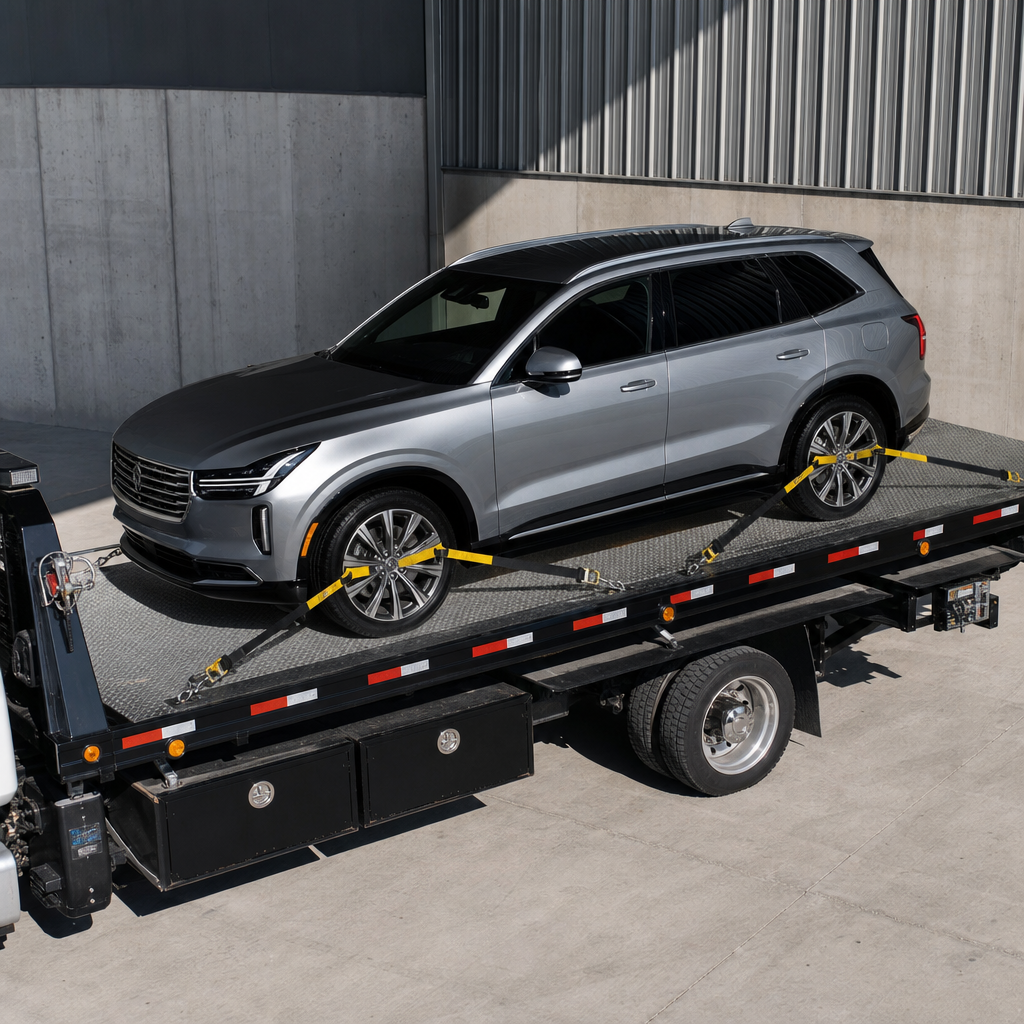
Do not attempt to push the vehicle on a busy road. A provider may recommend emergency towing when safe fuel delivery cannot be performed at the vehicle's current position.
While waiting: help the provider reach the correct side safely
The roadside process starts before the service vehicle arrives. Clear location and condition details help the dispatcher determine whether fuel can be delivered where the vehicle sits.
Information to have ready
- Your map pin or the nearest reliable address shown on your phone.
- Your direction of travel and which side of the road the vehicle is on.
- The vehicle's color, make, model, and visible position.
- Whether the vehicle is fully on a shoulder, in a parking area, or obstructing a lane.
- The fuel type the vehicle requires.
- Whether you tried restarting and whether the battery now sounds weak.
- Any immediate hazards, including poor visibility, standing water, smoke, or a fuel odor.
Keep the hazard flashers on if they are working, conserve phone power, and keep calls brief enough to remain reachable. During heavy rain, visibility can fall quickly and roadside footing can become unstable. Stay sheltered when the vehicle's position allows it; do not step out simply to wave down the provider. Confirm the arriving company's identity by phone before approaching.
After service arrives: fuel first, then a controlled restart
The provider should evaluate the vehicle's position before opening a fuel container. If passing traffic leaves inadequate working room, the safest next step may be relocating the vehicle by tow rather than pouring fuel beside an active lane.
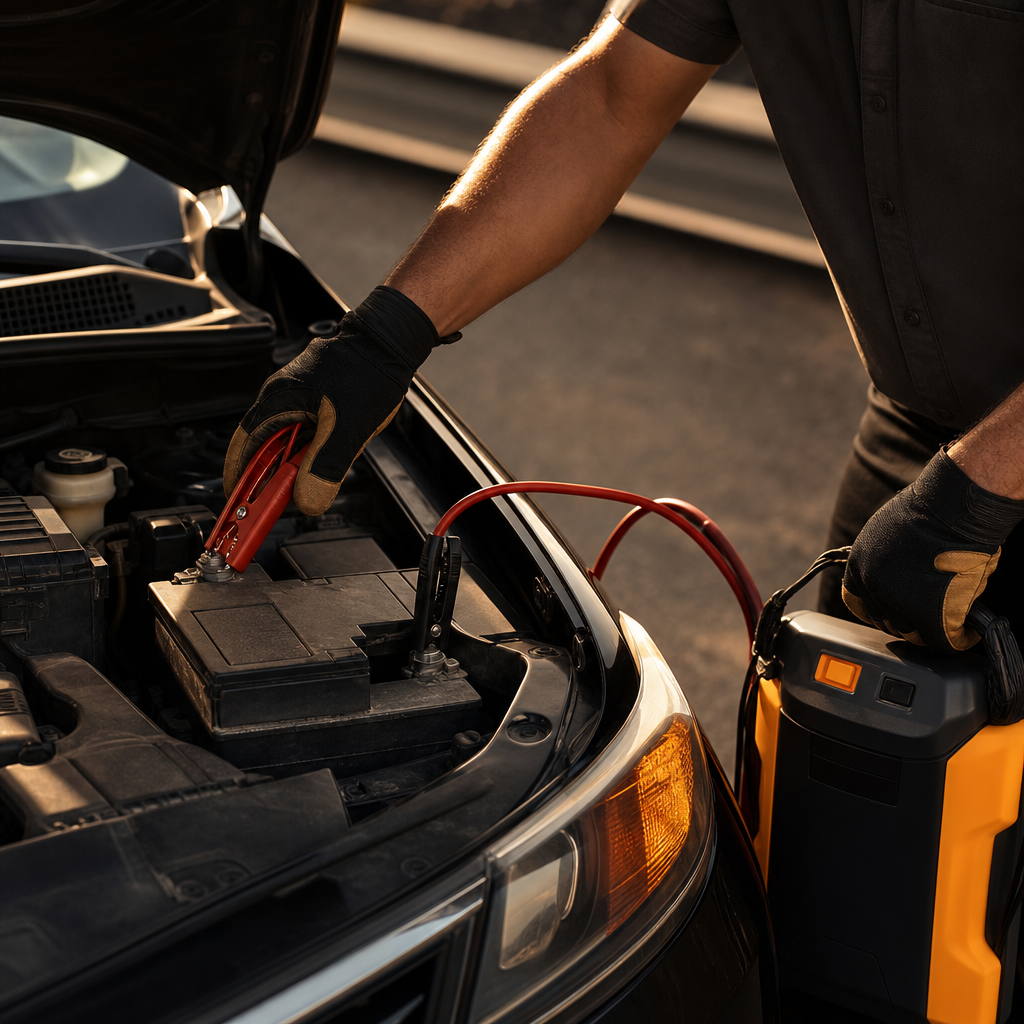
When access is safe, the provider adds fuel appropriate for the vehicle and asks the driver to attempt a controlled restart. Avoid repeated cranking. Running out of fuel can coincide with a weakened battery, but a no-start can also have another cause. If the starter slows or only clicks, jump-start assistance may be considered after the fuel issue is addressed.
If the engine starts, allow it to stabilize and check that warning indicators are not signaling another immediate problem. Re-enter traffic only when there is a safe gap and the vehicle responds normally. Go directly to a safely accessible station and add more fuel; a roadside delivery is intended to get the vehicle moving, not necessarily to fill the tank.
If the engine does not restart, stop repeated attempts and discuss towing. Continuing to assume the problem is only an empty tank can drain the battery and prolong roadside exposure.
Quick roadside checklist
- Hazard flashers on
- Vehicle as far from traffic as safely possible
- Parking brake set
- Location pin and direction of travel ready
- Correct fuel type confirmed
- No walking route attempted through exposed traffic
- Phone kept available for provider updates
- Towing requested if fuel service cannot be performed safely
Frequently asked questions
Is it ever reasonable to walk to a gas station?
Only when the full route is clearly separated from traffic, has safe crossings, is manageable in the current heat or rain, and does not require leaving a vulnerable passenger behind. If any part of the route is uncertain, call for delivery.
Should I wait inside an out-of-gas vehicle?
It depends on where the vehicle stopped. Inside may be safer when the vehicle is well outside traffic. If it is exposed in a lane or likely impact path, leave during a safe gap and move to a protected location away from the roadway.
What if I do not know whether the problem is fuel?
Tell the dispatcher what happened before the engine stopped, what the gauge shows, and what occurs when you try to restart. Accurate symptoms help the provider prepare for fuel delivery, battery assistance, or towing without requiring you to diagnose the vehicle.
Can roadside fuel delivery fill the tank?
Fuel delivery generally provides enough fuel for a restart and travel to a station. Confirm the service details when calling rather than assuming a specific amount.
When should I skip fuel delivery and request a tow?
Request towing when the vehicle cannot be serviced without exposing someone to traffic, when it remains in a hazardous position, when the correct fuel does not restore operation, or when another mechanical problem is apparent.
Call with the details that speed up the right decision
For fuel delivery or towing in West Palm Beach, be ready with your location pin, direction of travel, vehicle description, fuel type, roadside position, and any visibility or traffic hazards. Towing By Me can use that information to determine whether roadside fuel service is appropriate or a tow is the safer response.