A vehicle can start normally for weeks, then suddenly respond with a slow crank, clicking sound, or complete silence when it is time to leave. Short trips are often part of the reason. Starting an engine draws a large burst of power from the battery. If the drive that follows is only a few minutes, the charging system may not have enough operating time to fully replace that energy—especially when the battery is already aging or weakened by heat.
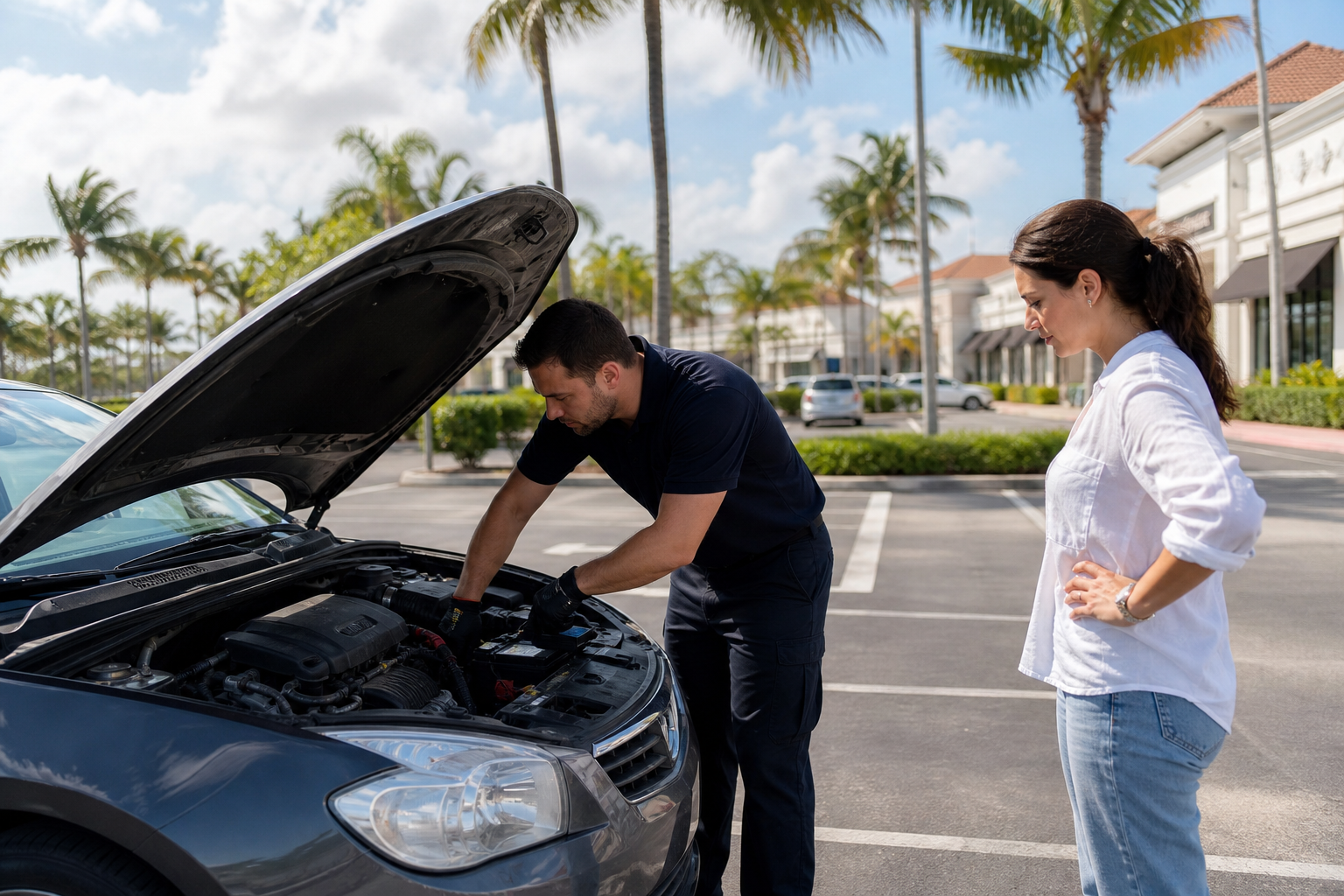
For drivers in West Palm Beach, a weak battery can be especially frustrating when a vehicle is parked at work, a grocery store, an apartment complex, or in a hot outdoor lot. Knowing the likely signs and taking a few safe steps can help you decide whether to try a jump start, arrange a tow, or avoid getting stranded again soon after the vehicle starts.
Why starting the car uses so much battery power
Before the engine can run on its own, the starter motor must turn the engine over. That requires far more electrical power than ordinary accessories such as interior lights or a radio. Once the engine is running, the alternator supplies electricity for the vehicle and recharges the battery.
A longer, normal drive generally gives the charging system more opportunity to restore the energy used during starting. A series of very short drives may not. The difference matters most when there is an added demand on the battery, such as headlights, windshield wipers, air conditioning controls, charging devices, or stop-and-go driving.
Short trips do not automatically ruin a healthy battery. They can, however, expose a battery that no longer holds a strong charge. A battery may appear fine after a recent drive yet lack enough reserve for the next start.
Why this can be more noticeable in West Palm Beach
South Florida heat can be hard on vehicle batteries over time. High temperatures can accelerate internal battery wear and may shorten the margin between “starts today” and “will not start tomorrow.” Heat does not always create an obvious warning. A battery may work during one errand and struggle after sitting in a hot parking area.
Short local errands can compound the issue: drive a few minutes, park, restart, then repeat. If your normal routine involves several brief trips instead of a sustained drive, it is worth paying closer attention to starting behavior.
Signs short trips may be catching up with your battery
A no-start situation is not always caused by the battery. Still, these clues often point toward low battery power or a battery connection issue:
- The engine turns over more slowly than usual, particularly after the vehicle has been parked.
- You hear a rapid clicking noise when turning the key or pressing the start button.
- Headlights, dashboard lights, or interior lights become noticeably dim during a start attempt.
- The vehicle starts after a jump but becomes difficult to start again after being parked.
- Power windows, locks, infotainment, or other electrical features seem weaker or reset unexpectedly.
- There is visible corrosion around the battery terminals or a loose-looking cable connection.
One weak start does not prove that the battery is at fault. A charging-system problem, poor cable connection, starter issue, or another electrical fault can produce similar symptoms. If the issue keeps returning, treat it as a reason to have the vehicle checked rather than relying on repeated jump starts.
A practical checklist before you get stranded
Pay attention to changes, not just failures
Do not wait for complete silence at startup. A gradual slowdown in cranking is useful information. If the engine is taking longer to start than it did recently, plan ahead while you still have options.
Limit unnecessary power use before restarting
Before turning the vehicle off after a short drive, make sure accessories are not left on. When you return, turn off high-draw accessories before attempting to start. This will not fix a worn-out battery, but it can reduce the electrical load during a weak start.
Check only what you can inspect safely
With the engine off, look for obvious battery concerns: a loose battery hold-down, corroded terminals, damaged cables, leaks, cracks, or swelling. Do not touch damaged battery material. Do not use metal tools around the terminals unless you know how to do so safely.
Build in an occasional longer drive when practical
If your vehicle is mostly used for quick errands, an occasional longer drive may help the charging system replenish the battery. This is not a cure for an aging battery or an electrical problem, but it can be better than repeated start-stop use alone.
Keep a backup plan
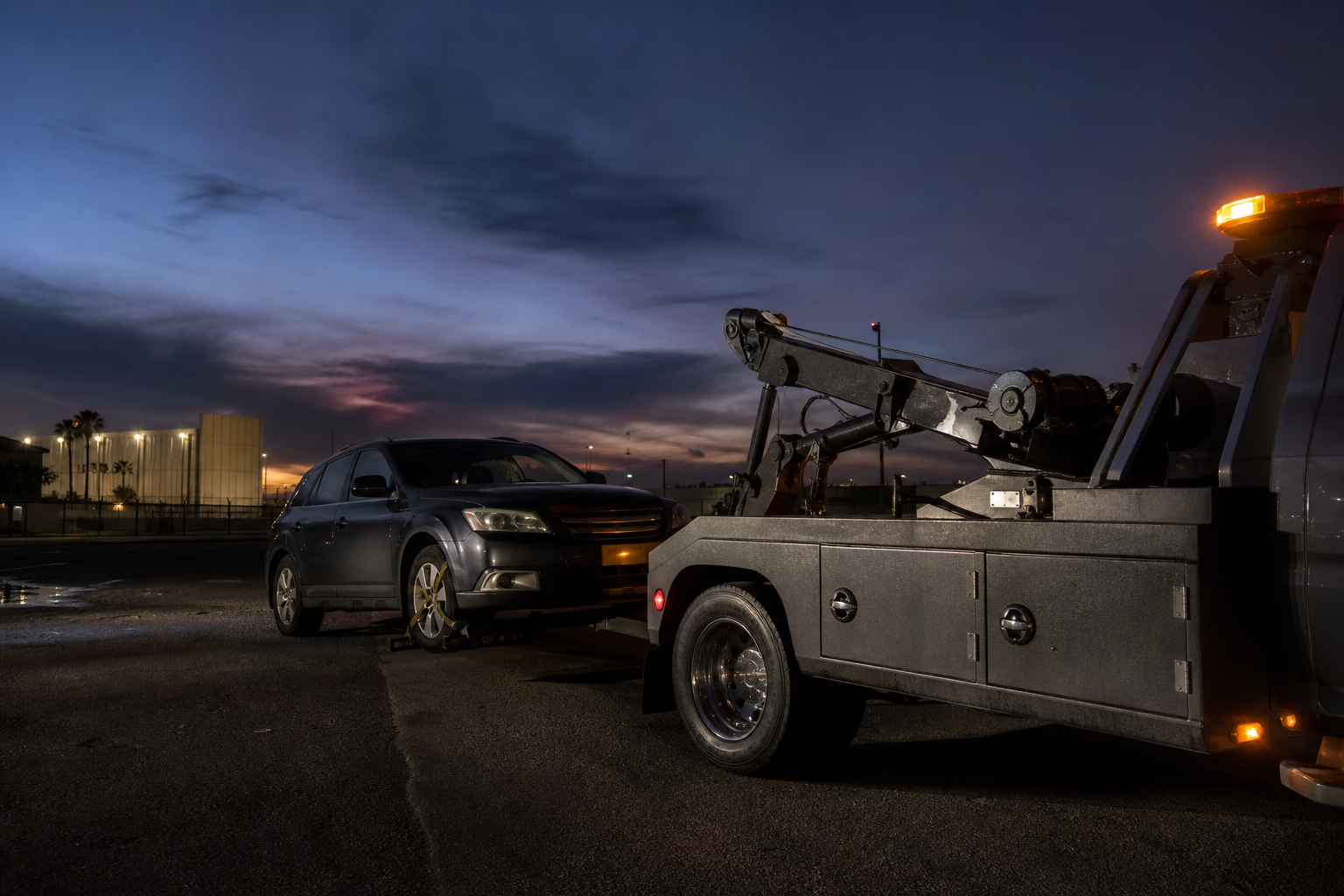
Save a roadside-assistance contact before a failure happens. If the vehicle is blocking traffic, parked in an unsafe area, or will not remain running, a 24-hour towing service can help move it to a safer destination.
Can you safely try a jump start?
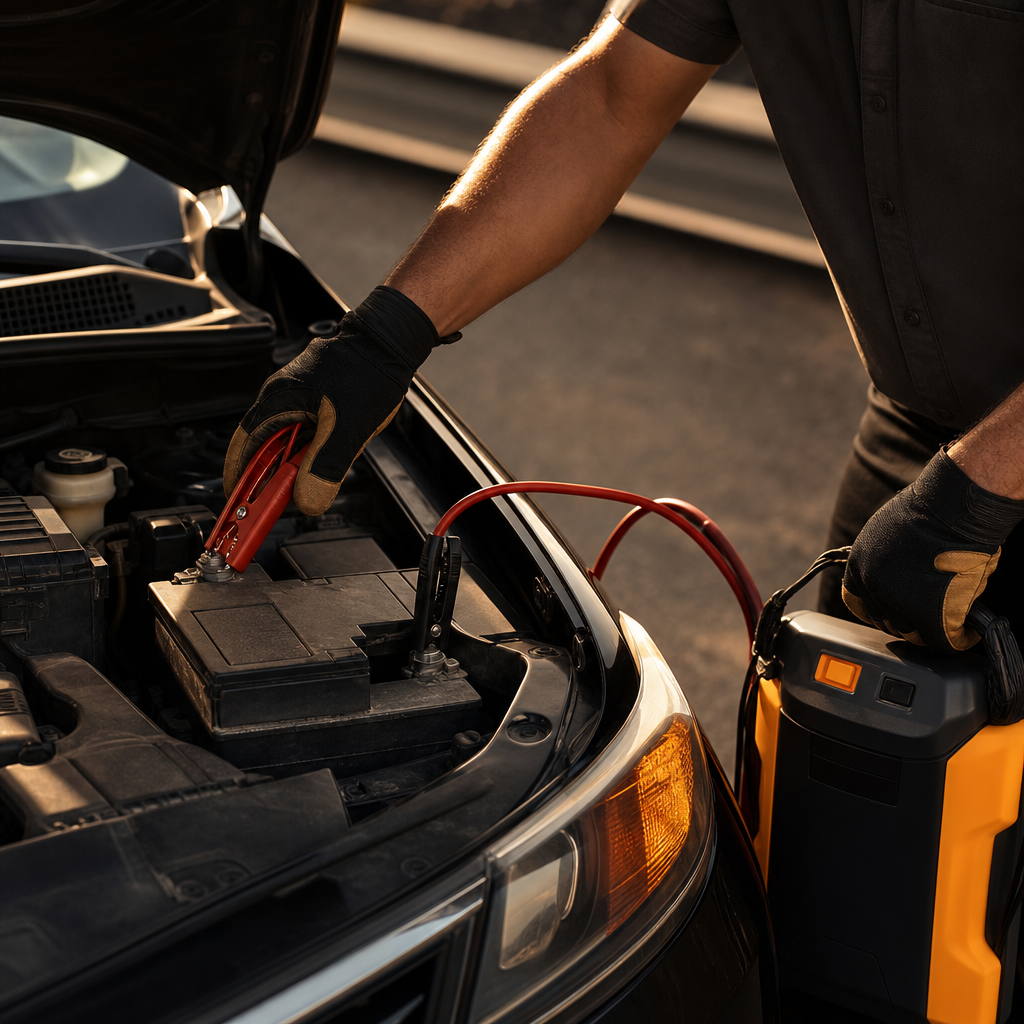
A jump start can be useful when the battery is simply too low to crank the engine, but it should be approached carefully. Follow the vehicle manufacturer’s instructions because battery locations, terminal access, and jump points vary. Some vehicles have designated jump terminals under the hood even when the battery is elsewhere.
Do not attempt to jump-start a battery that is damaged, leaking, swollen, frozen, or giving off a strong odor. Keep sparks, flames, and smoking materials away from the battery area. If you do not have proper cables, are uncertain about the connection order, or are parked where another vehicle cannot safely assist, it is better to call for help.
After a successful jump, avoid assuming the problem is solved. If the vehicle stalls, the battery warning light appears, or it will not restart after you park, there may be more than a low charge involved. A repeated no-start can turn a simple errand into a roadside situation.
When to call for roadside help instead of trying again
Call for assistance when the safest next step is unclear. Professional help is particularly useful in these situations:
- You are stopped on or near a busy road, a ramp, intersection, or other location where working under the hood is unsafe.
- The battery looks damaged or you smell sulfur-like odor near it.
- The vehicle has no power, the engine will not crank, or you are not sure whether the issue is the battery.
- You have already received a jump and the vehicle failed again soon afterward.
- You do not have safe access to jumper cables, another vehicle, or the correct jump points.
- The vehicle starts but has a warning light, runs poorly, stalls, or cannot be relied on for the next trip.
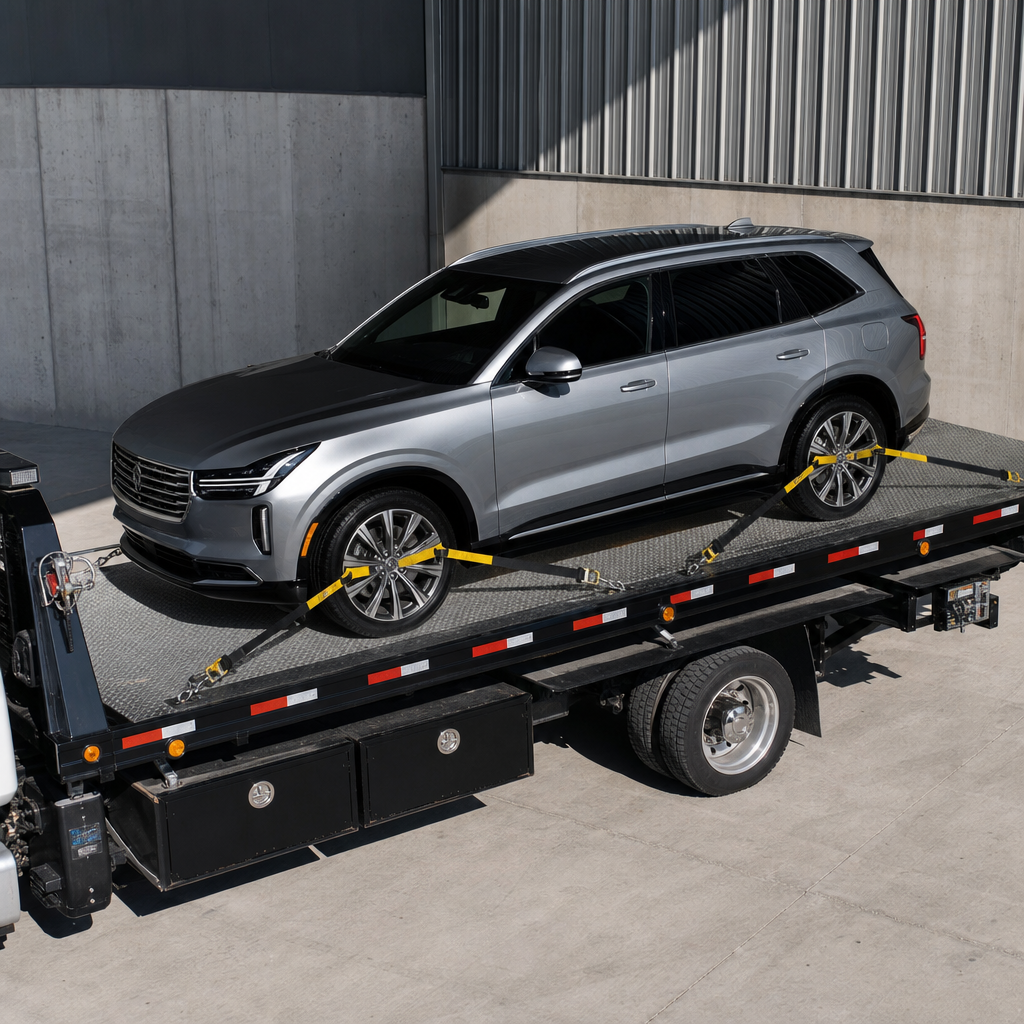
For a battery-related no-start, jump start assistance may be the appropriate first option. If the vehicle cannot be made dependable enough to drive or needs to go elsewhere for diagnosis, flatbed towing can provide a safer alternative to taking chances with another restart.
How to explain the problem when requesting help
A clear description helps a roadside provider understand your situation. Share your exact location, vehicle make and model if known, and whether you are in a safe parking area or near moving traffic. Mention what happens when you attempt to start: rapid clicking, one click, slow cranking, no lights, or a start followed by a stall.
Also mention whether the battery is visibly damaged, whether the vehicle recently needed a jump, and whether you are parked in a garage or another area with limited access. These details can help determine whether a jump start or towing is the better fit.
Frequently asked questions
Can short trips alone drain a car battery?
They can contribute, particularly when the battery is weak. Each start uses stored power, and very short drives may not fully replace it. A healthy battery and charging system usually tolerate normal short-trip use better than an aging or compromised battery.
Why did my car start after a jump but fail again later?
The jump may have supplied enough power for one start without addressing the underlying reason the battery was low. The battery may not be holding a charge, the alternator may not be charging correctly, or there could be a connection or electrical issue.
Should I keep trying to start a car with a weak battery?
No. Repeated start attempts can use the remaining charge and may leave you with less ability to power lights, locks, or hazard flashers. Try once, assess the symptoms, and choose the safest next step.
Does idling recharge a weak battery?
Idling may provide some charging, but it is not a dependable solution for a weak or failing battery. If the vehicle needs repeated jumps or has warning lights, it should be evaluated rather than left idling in hopes that the issue will disappear.
When is towing better than a jump start?
Towing is often the better choice when the vehicle will not stay running, the battery appears damaged, a warning light is present, the no-start keeps returning, or driving the vehicle would feel unsafe. Emergency towing can help when a jump is not the right solution.