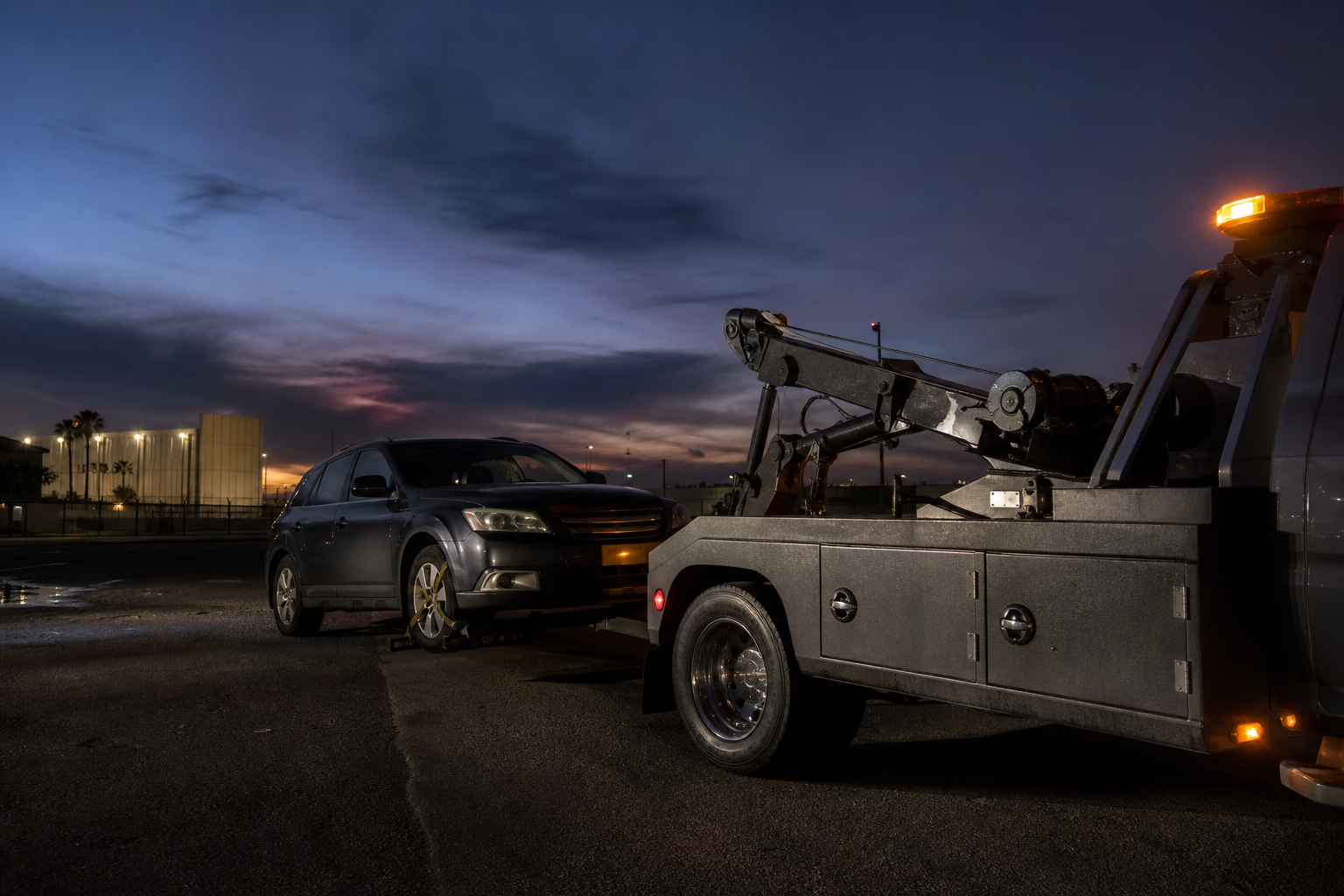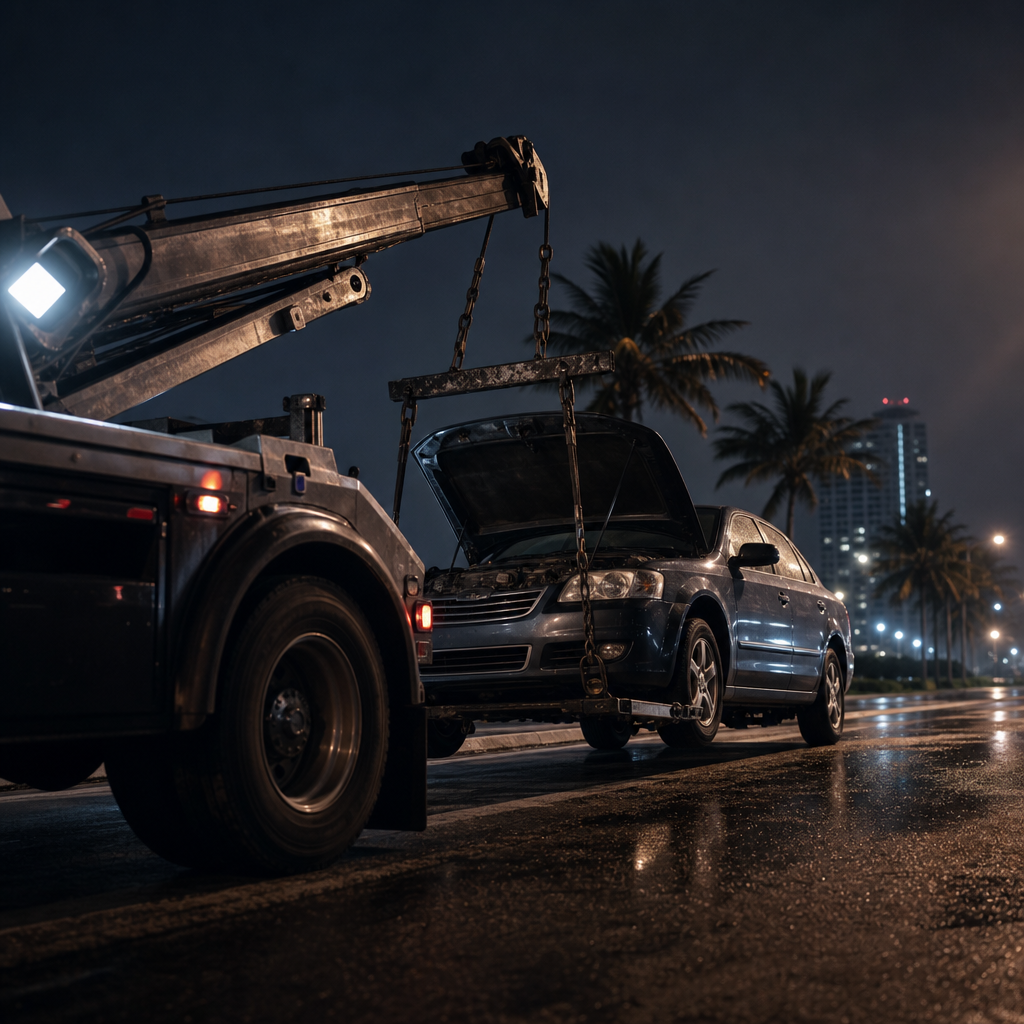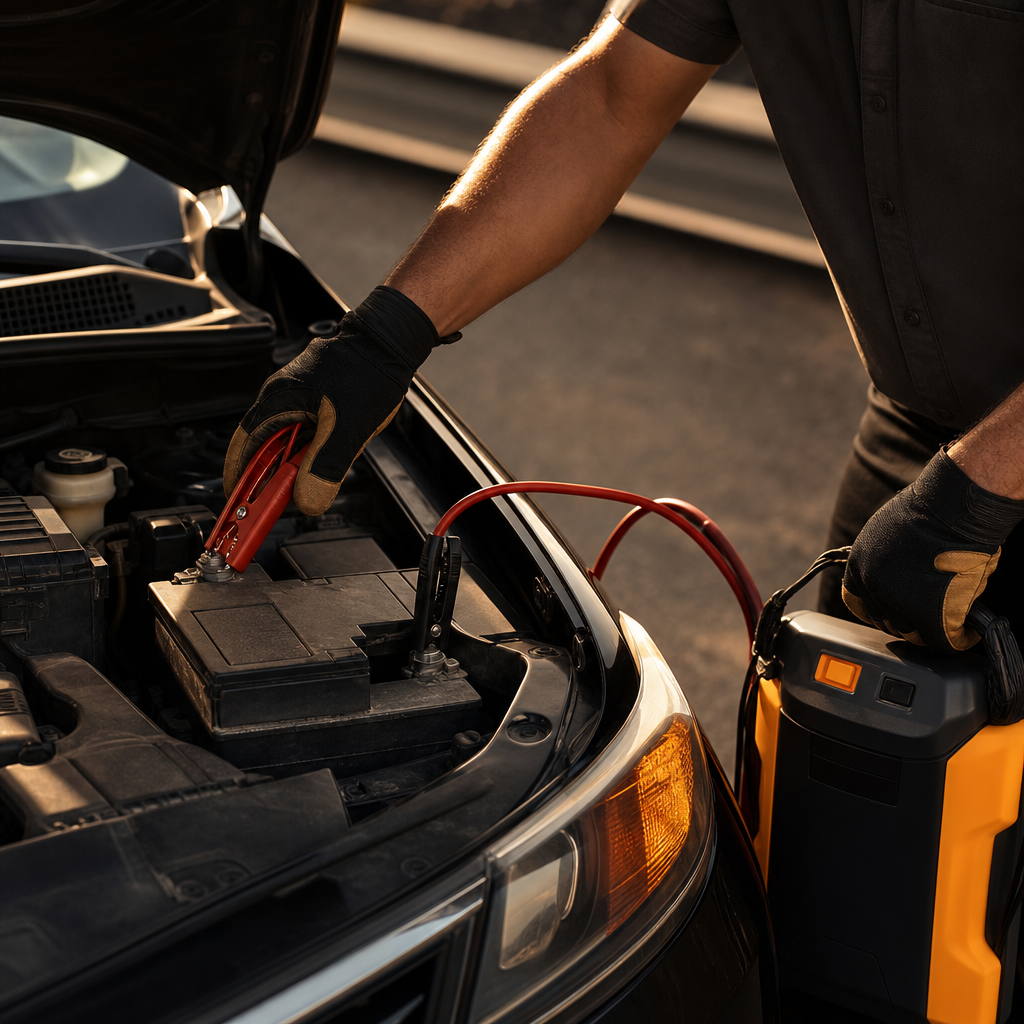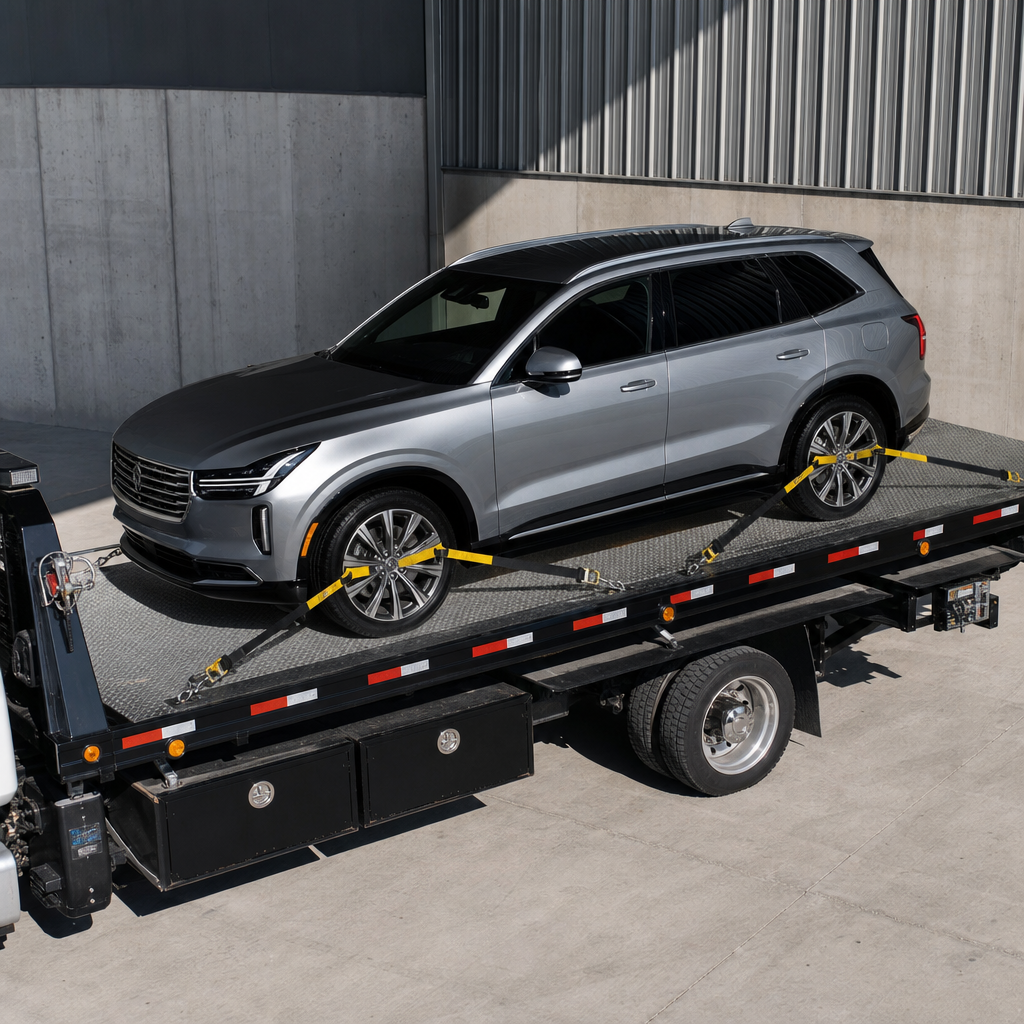
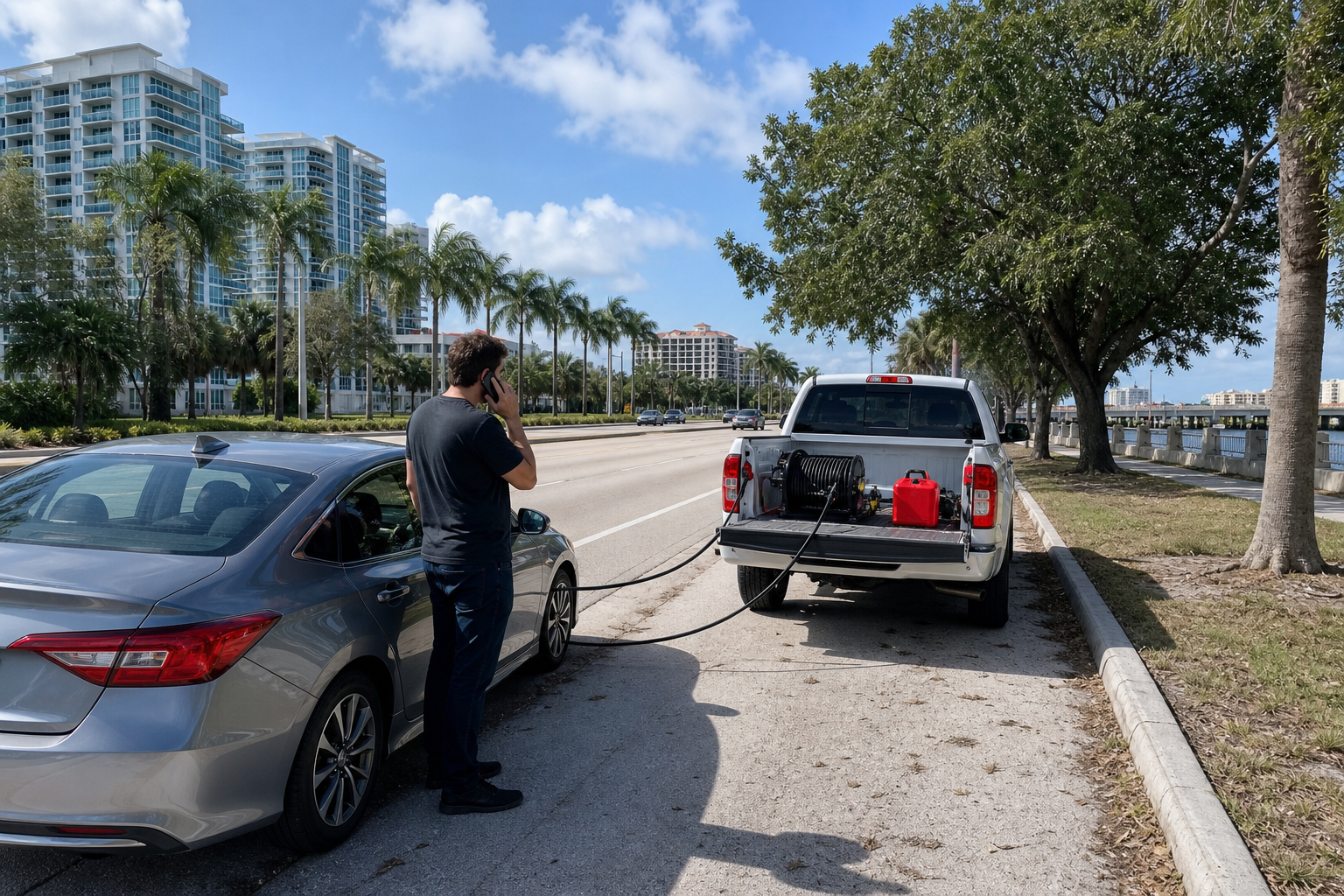
Quick decision rule: Emergency fuel delivery is usually the safest choice when your vehicle is fully out of moving traffic, you can stay in a safe position while waiting, and an empty tank is the only problem. Choose a tow instead if the vehicle cannot be moved to a safer place, traffic exposure is high, the car has other warning signs, or you are unsure what caused it to stop.
Do this first: make the location safer
- Get out of the travel lane if the vehicle can still move safely. Aim for a legal, stable area away from passing vehicles. Do not keep driving once the engine begins to stumble or die.
- Turn on hazard flashers. Keep them on while parked and while help approaches.
- Check your surroundings before getting out. If remaining inside with doors locked is safer, stay inside. If leaving the vehicle is safer, move away from traffic and do not stand beside the driver-side door.
- Call with your exact location. In West Palm Beach and elsewhere in Palm Beach County, the best location is not simply a nearby business name. Give the street, direction of travel, nearest cross street or entrance, vehicle color, and a description of where the car is positioned.
If the car is secure and accessible, request emergency fuel delivery. If its position is unsafe or it has a problem beyond fuel, request emergency towing instead.
Fuel delivery or tow? Use this roadside decision tree
- Did the vehicle stop because the tank is likely empty?
A low-fuel warning, a gauge near empty, and normal vehicle behavior before it ran out point toward fuel delivery. A sudden loss of power with dashboard warnings, smoke, unusual noises, overheating, or repeated stalling points away from fuel delivery. Choose a tow. - Can the vehicle be reached without putting the driver or roadside provider in a dangerous position?
If it is completely off the active roadway, in a parking area, driveway, garage access area, or another stable location with room to work, continue to the next question. If it is blocking traffic, stopped where approaching vehicles have little room, or positioned on an unstable shoulder, choose a tow or seek emergency assistance for immediate traffic danger. - Do you know the correct fuel type?
If you can confirm the vehicle’s required fuel from the fuel-door label, owner information, or another reliable source, fuel delivery may fit. If you are guessing, do not authorize fuel based on assumption. A tow is the safer option. - Will a small fuel delivery solve the immediate problem?
If you only need enough fuel to reach a nearby fueling stop after the vehicle starts normally, delivery makes sense. If the vehicle still will not start after a confirmed fuel delivery, do not continue repeated start attempts. Request flatbed towing or appropriate towing assistance.
At-a-glance roadside choices
| Fuel delivery is a good fit when… | Do not rely on fuel delivery when… |
|---|---|
| The vehicle is safely parked and reachable. | The vehicle is exposed to active traffic or cannot be approached safely. |
| The gauge and circumstances strongly suggest an empty tank. | The vehicle has warning lights, overheating, smoke, leaks, or unfamiliar mechanical symptoms. |
| You can confirm the required fuel type. | You are uncertain about the fuel type or suspect the wrong fuel was added earlier. |
| You can provide a precise West Palm Beach or Palm Beach County location and access instructions. | The vehicle is behind a gate, in a restricted-access area, or in a place where a provider cannot safely reach the fuel door. |
| The goal is to get safely to a fueling location after the engine starts normally. | The vehicle fails to start after fuel is delivered or appears to have a separate no-start issue. |
A safer way to request emergency fuel delivery
1. Confirm that “out of fuel” is a reasonable diagnosis
Think through the last few minutes before the vehicle stopped. Did the low-fuel warning appear? Did the engine lose power gradually? Was the vehicle otherwise driving normally? These clues are useful, but they are not proof. If there is any sign of a broader breakdown, describe it to the dispatcher rather than treating the issue as fuel only.
2. Stop trying to stretch the last fuel
Repeated attempts to restart a vehicle after it has run out may drain the battery and complicate the roadside situation. Once you are safely parked, stop cranking the engine. Keep the ignition and accessories off unless needed for safety, and preserve phone battery for location updates.
3. Prepare a dispatcher-ready location
Location accuracy affects access. Start with the city: West Palm Beach, Florida, if that is where you are. Then add the details that allow a provider to find the correct side of the area:
- Street name and nearest cross street, entrance, or address visible from the vehicle
- Direction of travel or which side of the street you are on
- Parking lot, driveway, garage level, gate, or building-access instructions when relevant
- Vehicle make, color, and the side where the fuel door is located if known
- Any access concern, such as low clearance, a locked gate, or a narrow drive
A map pin can help, but pair it with written details. Pins can land at the wrong entrance, on the opposite side of a divided area, or at a location that does not explain how to reach the vehicle.
4. Tell the dispatcher what you know—and what you do not know
State that you believe the vehicle is out of fuel, then share the fuel type only if you can verify it. Mention any warning lights, starting trouble, unusual odor, visible leak, or previous mechanical symptom. Honest uncertainty helps the dispatcher guide you toward fuel delivery, a 24-hour towing service, or another appropriate roadside option.
5. Wait where you are least exposed
Do not walk along traffic lanes to find fuel, accept fuel from an unknown source, or attempt to carry and pour fuel from an improvised container. Keep children and passengers away from traffic. If conditions change and the vehicle becomes unsafe where it is parked, update the dispatcher promptly.
6. After fuel arrives, reassess before driving
If the engine starts normally and there are no warning signs, proceed carefully to a fueling location rather than assuming the problem is permanently solved. If it does not start, runs poorly, stalls again, or displays concerning warnings, stop and arrange towing. The safest outcome is not always getting the vehicle moving immediately; sometimes it is moving it without further roadside exposure.
Call for help now if any of these apply
- You are stopped in or too close to moving traffic.
- You cannot identify a safe place to wait.
- You smell fuel, see a leak, see smoke, or notice overheating.
- You cannot confirm the correct fuel type.
- The vehicle stopped suddenly without the usual signs of an empty tank.
- The vehicle is inaccessible to a roadside provider or cannot be reached safely.
Safety-first next step: Contact Towing By Me with your precise West Palm Beach or Palm Beach County location, vehicle details, and roadside position. Ask for fuel delivery only when the vehicle and access conditions are safe; otherwise, ask for the towing option that keeps you out of further risk.
Fuel delivery questions drivers ask at the roadside
Is fuel delivery safer than walking to a gas station?
Often, yes. Walking near traffic or carrying fuel back to a vehicle creates avoidable exposure and handling risks. If your vehicle is safely parked and accessible, professional roadside fuel delivery is generally the safer choice.
Should I call for fuel delivery if my fuel gauge is not at empty?
You can call, but explain that the gauge does not show empty. A fuel gauge reading alone cannot confirm the cause of a no-start or stall. If the vehicle had other symptoms, towing may be more appropriate.
What information should I have ready for the dispatcher?
Provide your exact location, the vehicle’s make and color, the likely fuel type if verified, your best description of the problem, and any access instructions. In a large county such as Palm Beach County, saying only “West Palm Beach” is not enough to locate a parked vehicle.
What if the car will not start after fuel delivery?
Do not keep attempting to start it. Tell the provider the vehicle received fuel but remains unable to start, and arrange towing. That result suggests the problem may not be an empty tank alone.
Can fuel delivery help if my vehicle is parked in a garage or behind a gate?
It may be possible only when access is safe and clearly explained. Tell the dispatcher about gates, clearance limits, garage levels, or entry requirements before service is dispatched. If safe access is not available, towing may be the better plan.