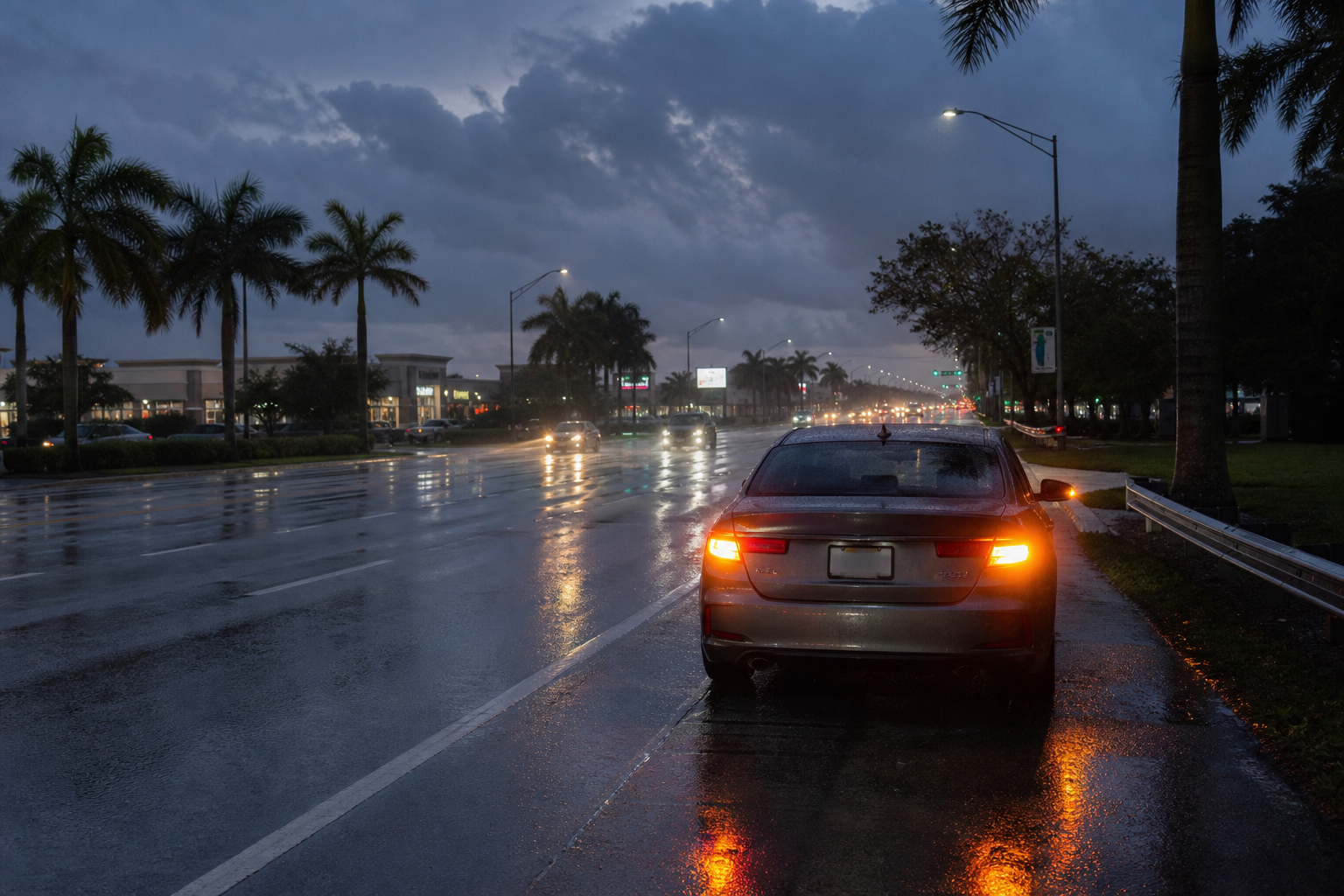
Tropical rain can make a simple roadside problem feel much harder. Visibility drops quickly, road noise masks approaching traffic, and a location that seemed obvious a few minutes ago may be difficult to describe over the phone. Whether you need a tow, fuel delivery, or help after a no-start, the goal is not just to be seen by other drivers. It is also to give the roadside-assistance provider enough information to find the correct vehicle without searching a long stretch of wet roadway.
Do These Things First
- Move out of travel lanes if you can do so safely. Do not continue driving through standing water.
- Turn on hazard lights and keep your headlights on if the vehicle is running safely.
- Stay in the vehicle with doors locked when you are safely off the roadway.
- Call for help and share your road name, direction of travel, nearest intersection or exit, and a map pin.
- If the vehicle is in an active lane, at immediate risk of being hit, or has fire or smoke, call emergency services for guidance. If it is feasible to reach a safer location without entering traffic or floodwater, follow emergency instructions.
Start With the Safest Possible Stopping Position
In a sudden downpour, drivers may stop wherever the vehicle loses power, develops a flat tire, or becomes unsafe to continue. If the vehicle still moves and there is a clearly safe place to pull over, aim for a paved shoulder, parking lot, service road, or other area well away from moving traffic. Avoid stopping just beyond a curve, at the bottom of an overpass, or where pooled water hides the road edge.
West Palm Beach drivers may encounter fast-moving traffic during rain on I-95, the Florida Turnpike, and major east-west routes such as Okeechobee Boulevard and Southern Boulevard. On those roads, an exact direction matters as much as the street name. “I-95 northbound near Okeechobee Boulevard” is far more useful than “near I-95.” If you can see an exit number, mile marker, cross street, ramp name, or nearby business sign from inside the vehicle, note it before calling.
Do not get out to inspect water depth, look for a better shoulder, or walk through pooled water. Water can conceal uneven pavement, debris, open drainage areas, and moving traffic. If you are stopped near flooded conditions, remain focused on getting help and communicating your location rather than trying to assess the water yourself.
Make the Vehicle Stand Out Without Creating New Risks
Hazard lights are the first visibility tool, but they are more effective when paired with a safe position and clear vehicle description. Keep the hazard lights activated while waiting, unless the vehicle’s battery condition makes that impossible. If the engine is running normally and there is no smoke, overheating concern, or other immediate hazard, headlights can also help other drivers notice the vehicle in heavy rain.
Use what is already on the vehicle
- Hazard flashers: Turn them on as soon as you are safely stopped.
- Headlights: Use them in low visibility when the vehicle can safely remain running.
- Interior light: At night, briefly turning on an interior light when the tow truck arrives can help confirm that you are the correct vehicle. Do not leave it on unnecessarily if battery power is limited.
- Vehicle details: Tell dispatch the color, make, model, body style, and any easy-to-see feature such as a roof rack or distinctive rear-window decal.
Avoid placing warning devices in traffic during severe rain, darkness, or fast-moving conditions. Walking behind or alongside a disabled vehicle can put you in a more dangerous position than remaining inside. Your towing provider needs to find you, but they do not need you standing outside in the rain waving them down.
Give a Location That a Tow Driver Can Actually Use
Phone maps are helpful, but a dropped pin alone is not always enough. Pins can land on the wrong side of a divided road, drift toward a nearby access road, or fail to show which direction you were traveling. Give your location in layers.
The four details to share
- Road and direction: Example: “I-95 southbound” or “Okeechobee Boulevard westbound.”
- Nearest fixed reference: An exit, intersection, bridge, ramp, traffic signal, shopping center entrance, or clearly visible sign.
- Your exact position: Right shoulder, left shoulder, parking lot, entrance lane, median-side shoulder, or on-ramp.
- Vehicle description: Color, make, model, and whether hazard lights are on.
For example: “I am on I-95 northbound, on the right shoulder after the Okeechobee Boulevard exit. I am in a silver SUV with hazard lights on.” That description is much easier to act on than “I’m by Palm Beach Lakes.”
When safe, enable location sharing from your phone or send a map pin to the dispatcher. You can also use your phone’s emergency/SOS function if you need emergency assistance and can do so safely. A shared location is an extra tool, not a substitute for road direction, exit details, and which side of the roadway you are on.
What to Say When You Request Roadside Help
Rain changes the kind of service you may need. Be specific about the problem so the provider can prepare for the situation and route the appropriate truck.
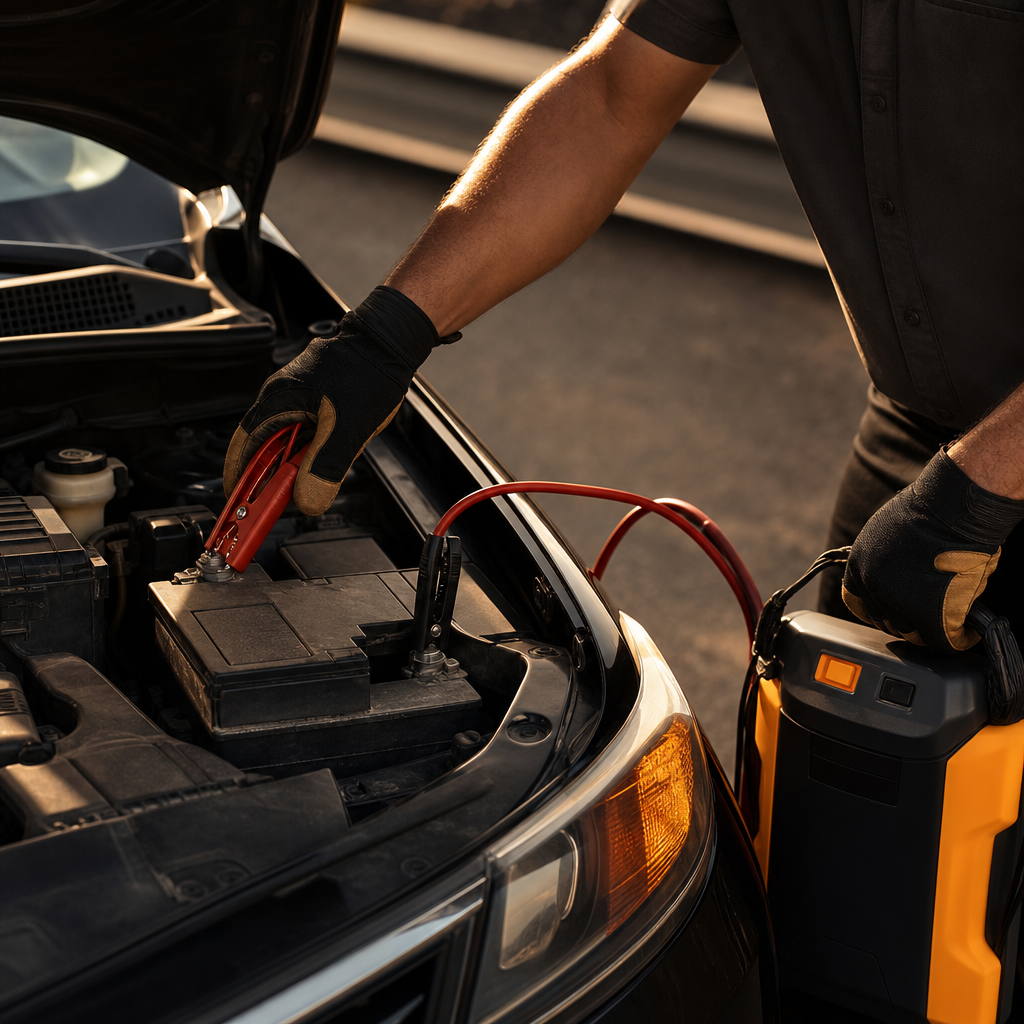
- If the vehicle will not start, explain whether the dashboard lights come on and whether you suspect a battery issue. You may need jump start service.
- If you have a flat tire, tell the dispatcher whether the vehicle is safely off the roadway and whether a spare is available.
- If the vehicle is out of fuel, describe your location carefully and request fuel delivery.
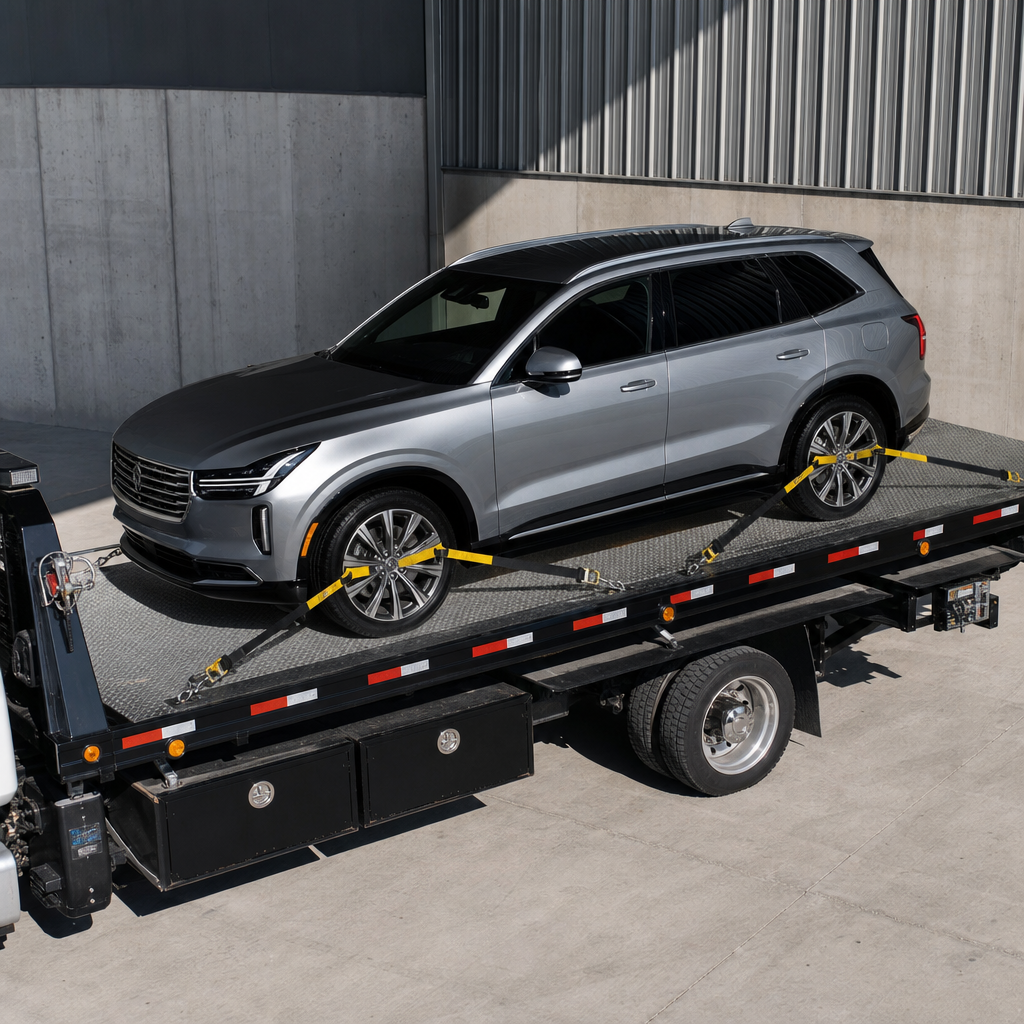
- If the vehicle cannot be driven safely, ask for flatbed towing or other appropriate towing assistance.
- If you are stranded in a lane, near fast traffic, or in worsening weather, say that immediately. The provider needs to understand the roadside exposure before arrival.
Keep your phone charged if possible. Lower screen brightness, close unneeded apps, and use a car charger or power bank if one is available. If your battery is nearly depleted, make the service call first, then conserve power for updates from the towing provider.
Waiting Safely Until Help Arrives
If your vehicle is safely away from traffic, staying inside is usually the best choice during heavy rain. Keep doors locked, wear your seat belt if you are close to moving traffic, and watch for the approaching service vehicle from inside. Do not stand on the shoulder to search for the truck.
There are important exceptions. If the vehicle is stopped in an active travel lane, is at risk of being struck, has smoke or fire, or has another immediate danger, contact emergency services right away. Follow their directions about whether to remain in place or move to a safer location. Do not attempt to cross active lanes, and do not enter floodwater to leave the vehicle.
When the tow truck arrives, confirm the provider and service before unlocking the door or stepping outside. If conditions allow, communicate through a slightly opened window or by phone until the driver explains where they need you to stand or how to prepare the vehicle for loading.
Quick Tropical-Rain Roadside Checklist
- Hazard lights on
- Vehicle positioned out of traffic if safely possible
- Road name and direction noted
- Nearest exit, intersection, or landmark identified
- Vehicle color, make, model, and position ready to share
- Map pin or live location shared when safe
- Phone battery conserved
- Doors locked and occupants kept inside when safely off the roadway
- No walking in traffic or entering standing water
When to Call for Towing Instead of Trying to Continue
Call for 24-hour towing when the vehicle cannot be operated safely, has lost power in a location where restarting would be risky, has damage that affects driving, or would require you to remain exposed on the roadside while attempting a fix. In tropical rain, visibility and road conditions can turn a manageable issue into a dangerous one quickly.
It is especially reasonable to request help when you cannot confidently identify a safe route away from standing water, when rain prevents you from seeing road conditions clearly, or when you are stranded near high-speed traffic. Waiting for trained roadside assistance is often safer than repeatedly attempting to drive a disabled vehicle through worsening conditions.
Frequently Asked Questions
Should I turn on my hazard lights in heavy tropical rain?
Yes. If you are stopped or moving unusually slowly because of a vehicle problem, activate your hazard lights. They help approaching drivers and the towing provider identify your vehicle in reduced visibility.
Is a map pin enough for a tow truck to find me?
Not always. Send the pin when safe, but also provide the road name, travel direction, nearest exit or intersection, and whether you are on the right shoulder, left shoulder, ramp, or in a parking area.
What if I am stopped on I-95 or another busy road?
Tell the dispatcher that you are on a high-speed roadway and state your direction of travel and nearest exit. If you are in an active lane, feel exposed to traffic, or face an immediate danger, call emergency services for guidance.
Should I get out to check floodwater around my vehicle?
No. Do not exit the vehicle or enter water to judge its depth. Water may hide hazards and the surrounding roadway may be unsafe. Focus on communicating your location and requesting assistance.
Can I request help if I only need fuel or a jump start?
Yes. Roadside assistance is appropriate for common problems such as a dead battery or an empty fuel tank. Describe the issue and your exact location so the provider can send the right service.