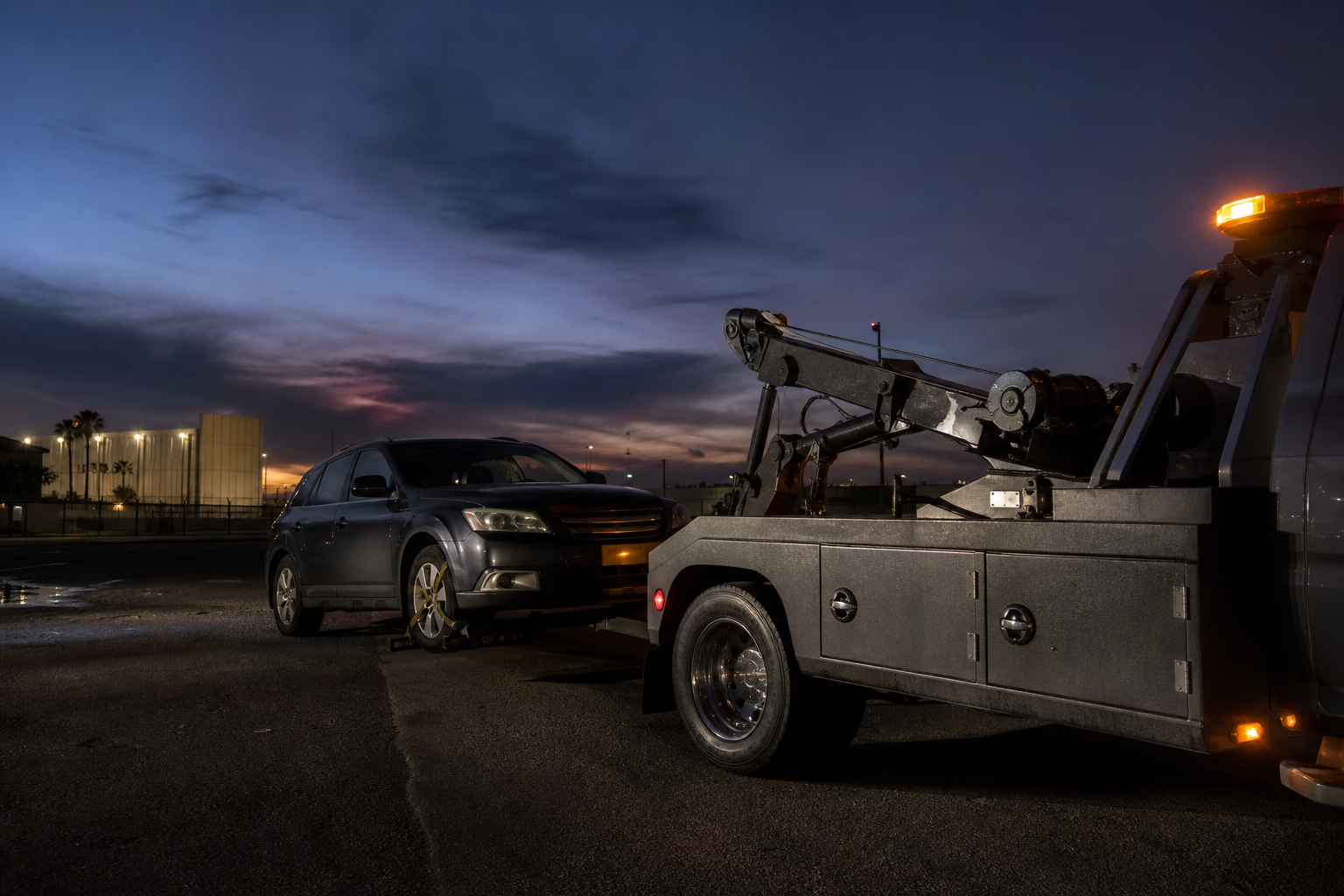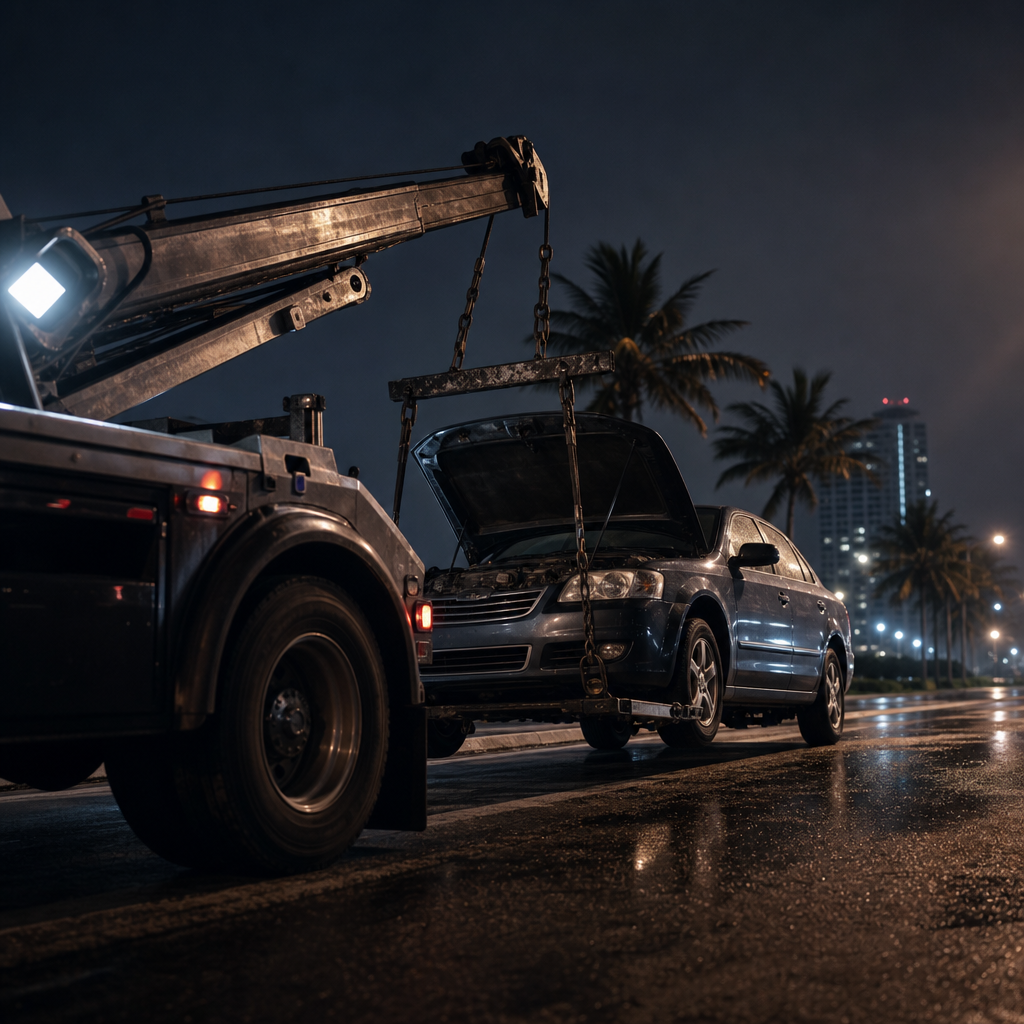
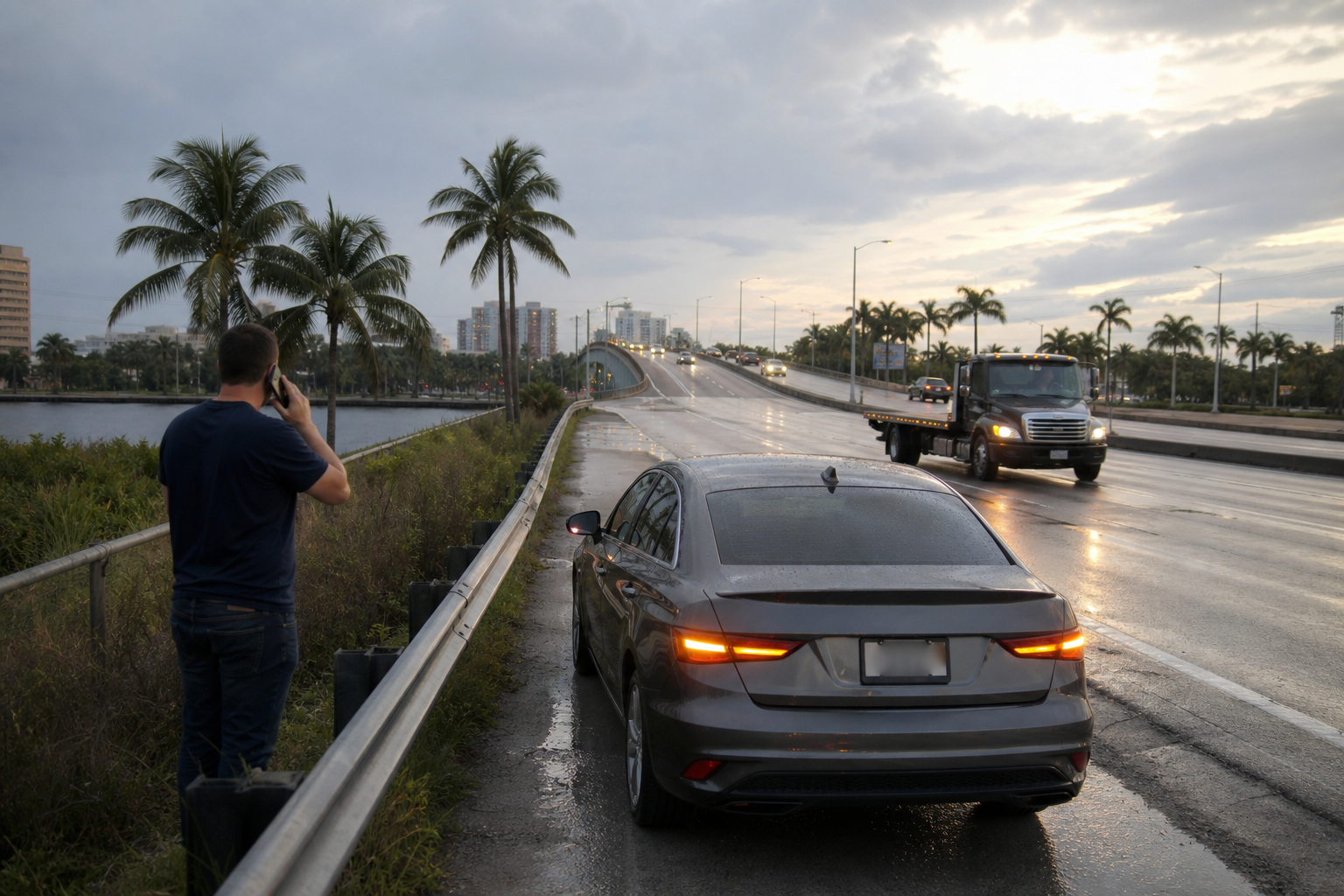
If your steering suddenly feels loose, locked, heavy, disconnected, or your brake pedal does not slow the vehicle normally, do not try to “test” the vehicle by continuing your trip. Focus first on reducing speed, choosing the safest reachable stopping space, and getting out of the traffic flow. Once stopped, a tow is usually the safer next step when steering or braking response has changed.
Immediate actions: Hold the wheel with both hands, ease off the accelerator, turn on hazard flashers when you can do so safely, look far ahead for a low-conflict place to stop, and brake smoothly. Avoid sudden steering inputs, rapid downshifts, or experimenting with unfamiliar controls while moving.
Match the symptom to your next move
Not every control problem feels the same, but each one deserves a conservative response. Use this matrix to decide what to do while the vehicle is still moving.
| What you notice | What it can mean for control | Best immediate response |
|---|---|---|
| Brake pedal is soft, sinks farther than normal, or braking is much weaker | Stopping distance may be far longer than expected. | Release the accelerator, create space ahead, press the brake pedal firmly and steadily, and aim for the nearest safe stopping area. |
| Brake pedal is very hard and requires unusual effort | Brake assist may be reduced, making slowing down harder. | Use firm, controlled pressure and plan a longer stopping distance. Do not follow traffic closely. |
| Steering becomes unusually heavy | You may still be able to steer, but sharp or fast turns can be difficult. | Keep both hands on the wheel, make gradual inputs, reduce speed, and seek a straight, open place to stop. |
| Wheel pulls strongly, shakes violently, or does not respond normally | The vehicle may not track predictably. | Do not fight the wheel with abrupt corrections. Ease off the accelerator, hold a steady course as possible, and stop as soon as a safe area is available. |
| Steering wheel seems disconnected, locks, or the vehicle will not turn as expected | Directional control may be severely limited. | Slow down immediately, avoid tight maneuvers, warn other drivers with hazards if possible, and treat this as an urgent stop-and-call situation. |
Stop now, or move only far enough to get safer?
The practical decision is not “Can the vehicle still move?” It is “Can I control it predictably enough to reach a safer stopping point without exposing myself or others to more risk?”
- Stop as soon as practical if steering response is missing, the wheel is binding or locked, brakes barely work, the vehicle pulls hard, or you cannot hold a stable path.
- Move only to an immediate safer position if you are stopped in an active lane but still have enough controlled steering and braking response to reach a nearby shoulder, parking area, garage level, or other refuge. This is not permission to continue toward home, a shop, or another destination.
- Do not continue driving after the vehicle is safely stopped. A temporary return of normal feel does not confirm that the underlying problem is gone.
In West Palm Beach, this decision can be especially urgent on fast-moving arterial corridors, bridge approaches, and rain-slick streets where traffic may close distance quickly. A narrow shoulder or constrained-access location can make staying in the vehicle or exiting it more complicated. Choose the least exposed option available rather than trying to reach a more convenient location.
During the stop: use only controls you understand
Keep your eyes up and scan for open space. Reduce speed before attempting turns. If your vehicle’s owner’s manual has an emergency procedure for loss of braking, steering assist, or an electronic parking brake, follow that procedure only when it is safely available and you understand it.
Do not assume every vehicle handles Neutral, ignition controls, or electronic parking-brake activation the same way. Some actions can reduce control or behave differently by model. If you do not already know your vehicle’s approved emergency method, do not experiment while moving. Your priority is a controlled stop using the steering and braking response that remains.
Once stopped, shift into Park if the vehicle can do so normally, set the parking brake if it can be applied safely, and keep hazards on. If smoke, fire, a fuel smell, or an immediate collision risk is present, move away from the vehicle only when you can do so without entering traffic, then contact emergency services.
Roadside checklist after you are stopped
- Turn on hazard flashers and keep the vehicle visible without standing near moving traffic.
- Check your location: direction of travel, nearest cross street, garage level, airport pickup area, or a recognizable access point.
- Take a quick look for a flat tire, obvious fluid on the ground, smoke, or a damaged wheel—without reaching under the vehicle.
- Do not repeatedly pump, turn, restart, or drive the vehicle in an attempt to make the symptom disappear.
- Keep passengers in the safest available position. If remaining inside creates greater danger because of traffic exposure, move to a protected area only when a safe path exists.
- Gather your vehicle color, make, model, plate number, and the symptom that appeared first.
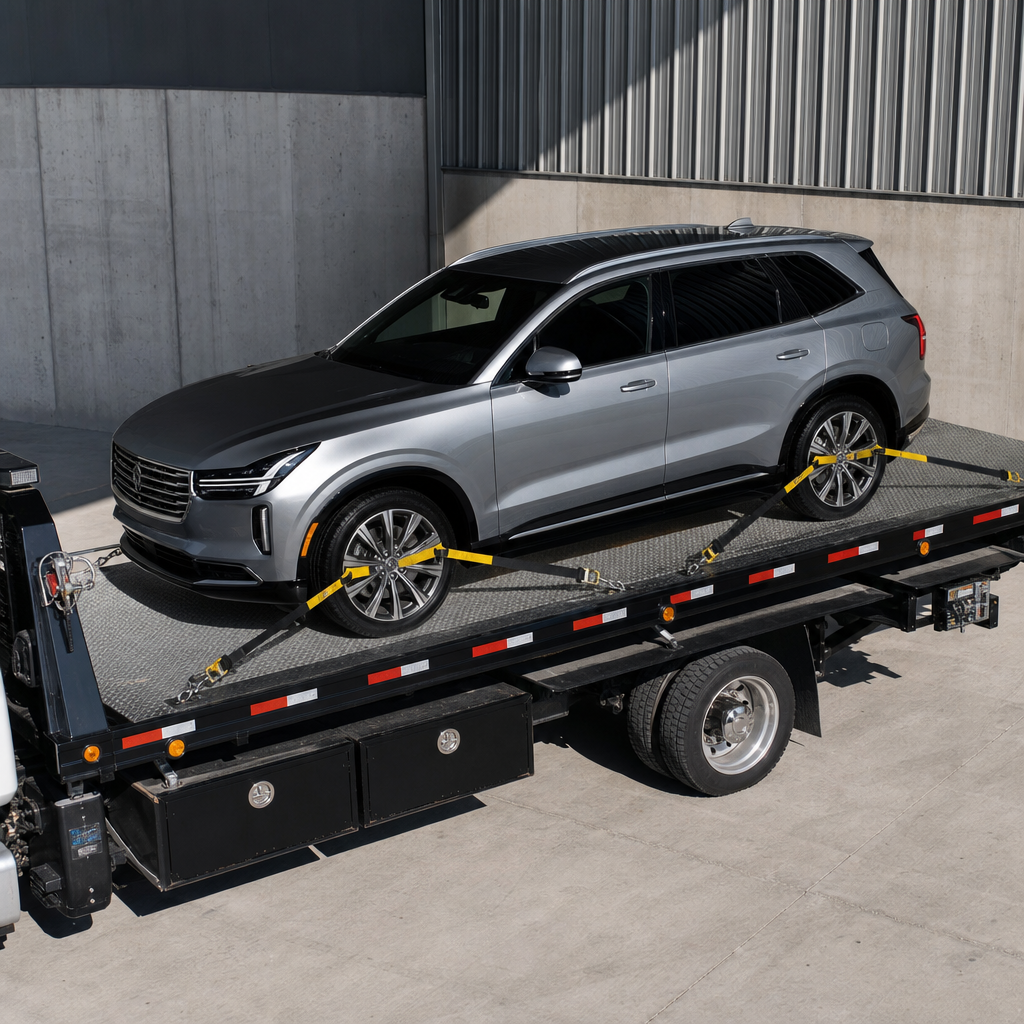
If the vehicle is in a parking garage, airport access area, or another constrained location, tell the dispatcher about clearance limits, entry instructions, level number, and whether the vehicle can roll and steer. That information helps determine whether a flatbed or another safe towing approach is appropriate. For a vehicle that should not be driven, request flatbed towing when available.
What to tell the towing or roadside dispatcher
A clear description helps avoid delays and prevents unsafe assumptions about how the vehicle can be loaded. State the facts rather than trying to diagnose the cause.
- “The brake pedal became soft and the car needed much more distance to stop.”
- “The steering became extremely heavy, but I could guide it into a parking area.”
- “The wheel pulls hard to one side and I do not want to drive it.”
- “The vehicle is in a garage on level ___ and may have limited maneuvering room.”
- “The vehicle is stopped facing ___ and can/cannot roll, steer, shift, or start.”
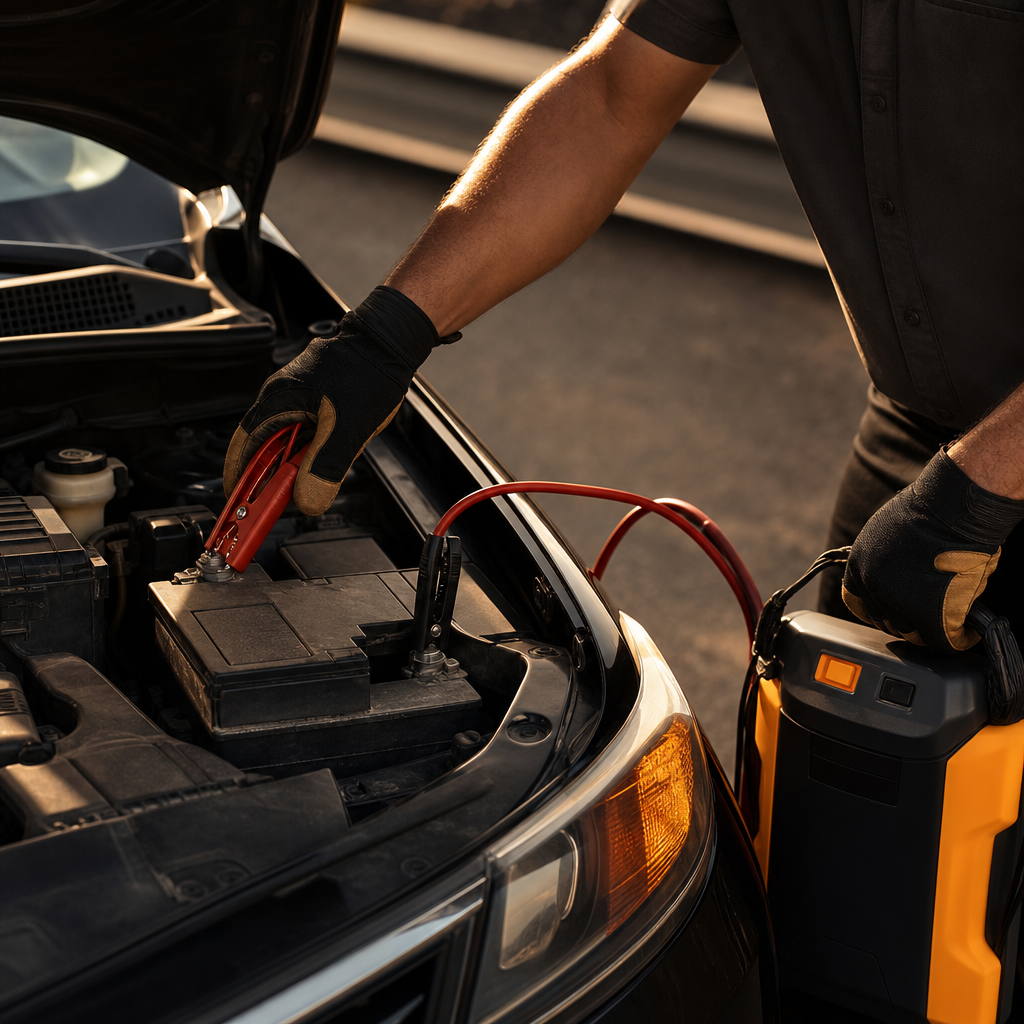
For an active control-loss situation that leaves you stranded, use emergency towing rather than attempting a restart-and-drive decision alone. If the issue turns out to be a no-start condition after you are already safely parked, jump start service may be relevant—but a jump start does not address a steering or braking symptom.
Before the tow arrives
Remove valuables and any item you will need immediately, such as medication, keys, identification, and child seats if appropriate. Keep the key available, but do not leave it in an unsafe position. If you can safely do so, photograph the vehicle’s position and any visible warning messages or damage. This gives the tow operator useful context without requiring you to remain beside the vehicle.
Do not agree to have a friend pull the vehicle with a strap or try to coast it farther. A vehicle with uncertain braking or steering response needs controlled handling and loading.
Quick answers for stranded drivers
Can I drive slowly if my brakes still work a little?
No. Reduced braking can become inadequate without warning, and slow speed does not eliminate the risk of failing to stop at a turn, driveway, intersection, or parking obstacle. Move only as needed to reach an immediate safer stopping point.
What if my power steering stops but I can still turn the wheel?
The wheel may require much more effort, especially at low speed. Keep both hands on it, avoid abrupt turns, stop in the nearest suitable area, and arrange towing rather than continuing through West Palm Beach traffic.
Should I use the parking brake to stop?
Use only the emergency method specified for your vehicle if you already know it and conditions allow. Parking-brake systems vary substantially. Do not rely on a universal technique or test an unfamiliar electronic control while moving.
Do I need a flatbed?
A flatbed is often the cautious choice when a vehicle has steering, braking, wheel, or rollover concerns, or when it cannot be safely driven or maneuvered for loading. Describe the condition and location so the towing provider can select suitable equipment.
Choose the next call based on control, not convenience
If you cannot steer or brake predictably, are exposed in traffic, or cannot safely move the vehicle, request 24-hour towing now. If you are already securely parked and the vehicle simply will not restart, roadside assistance may be the better fit. The key distinction is control: any unresolved steering or braking change means the vehicle should stay parked until it can be safely transported.