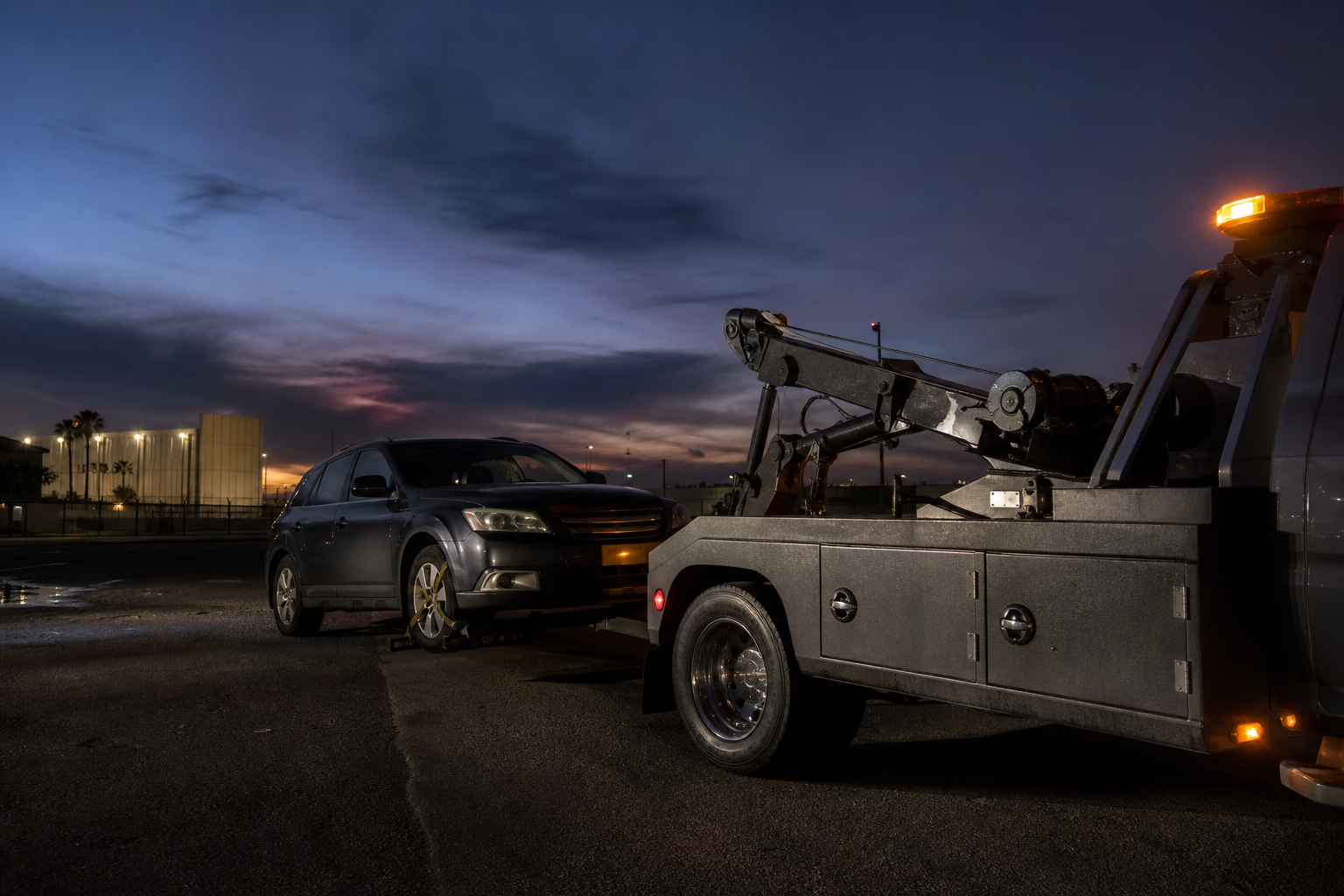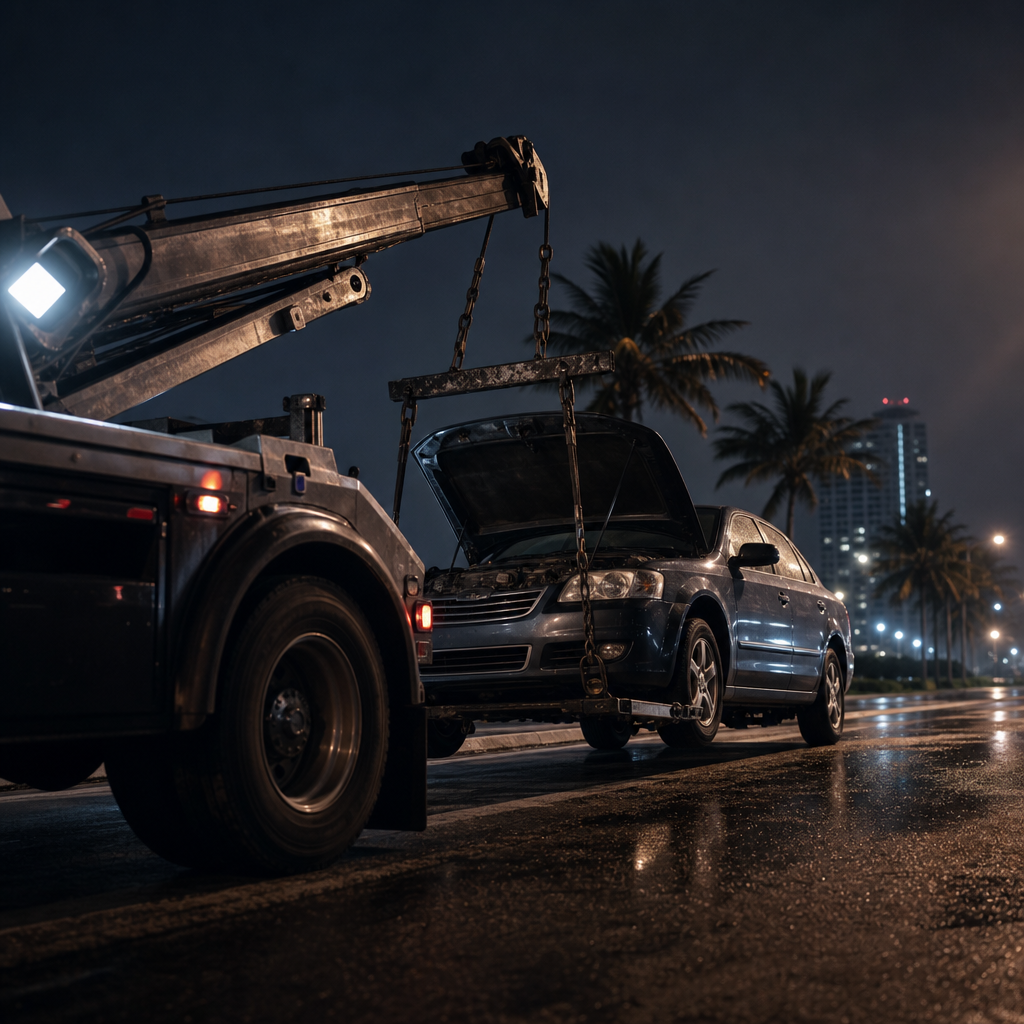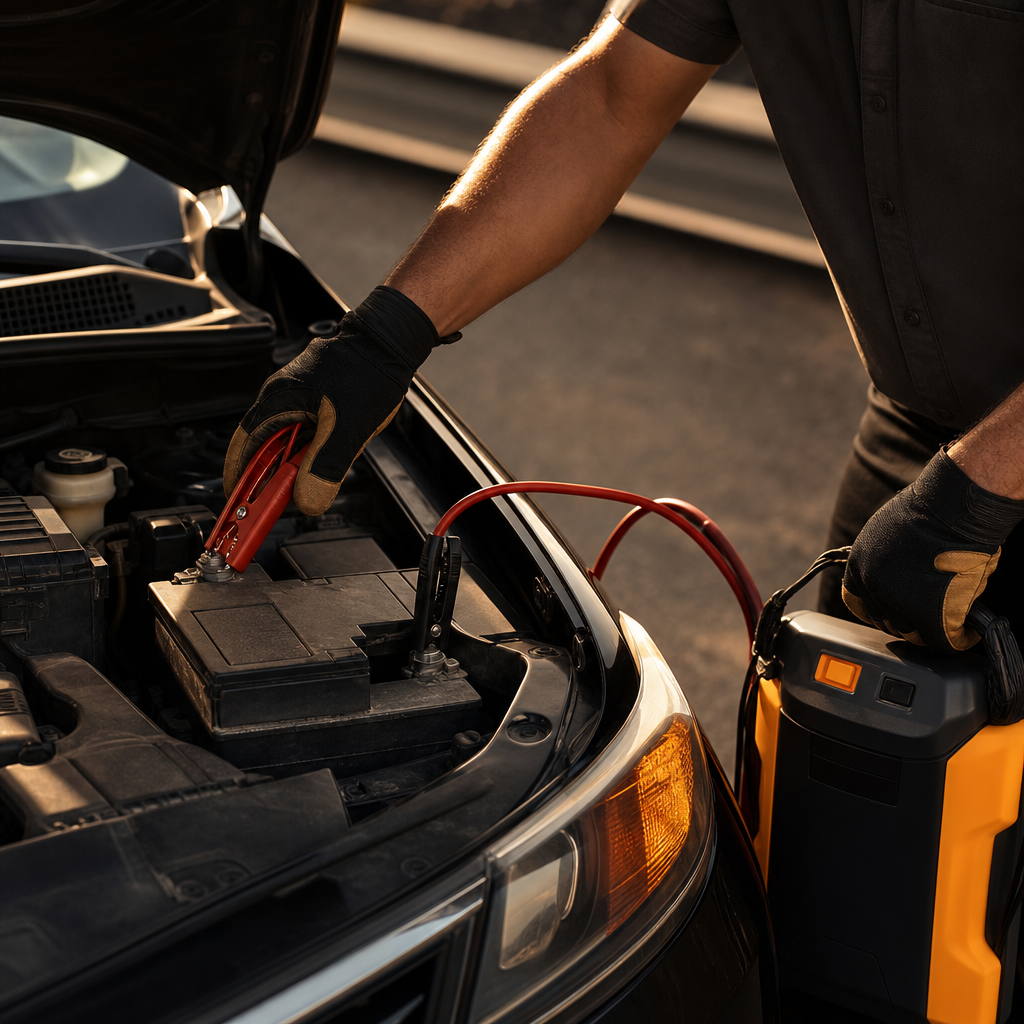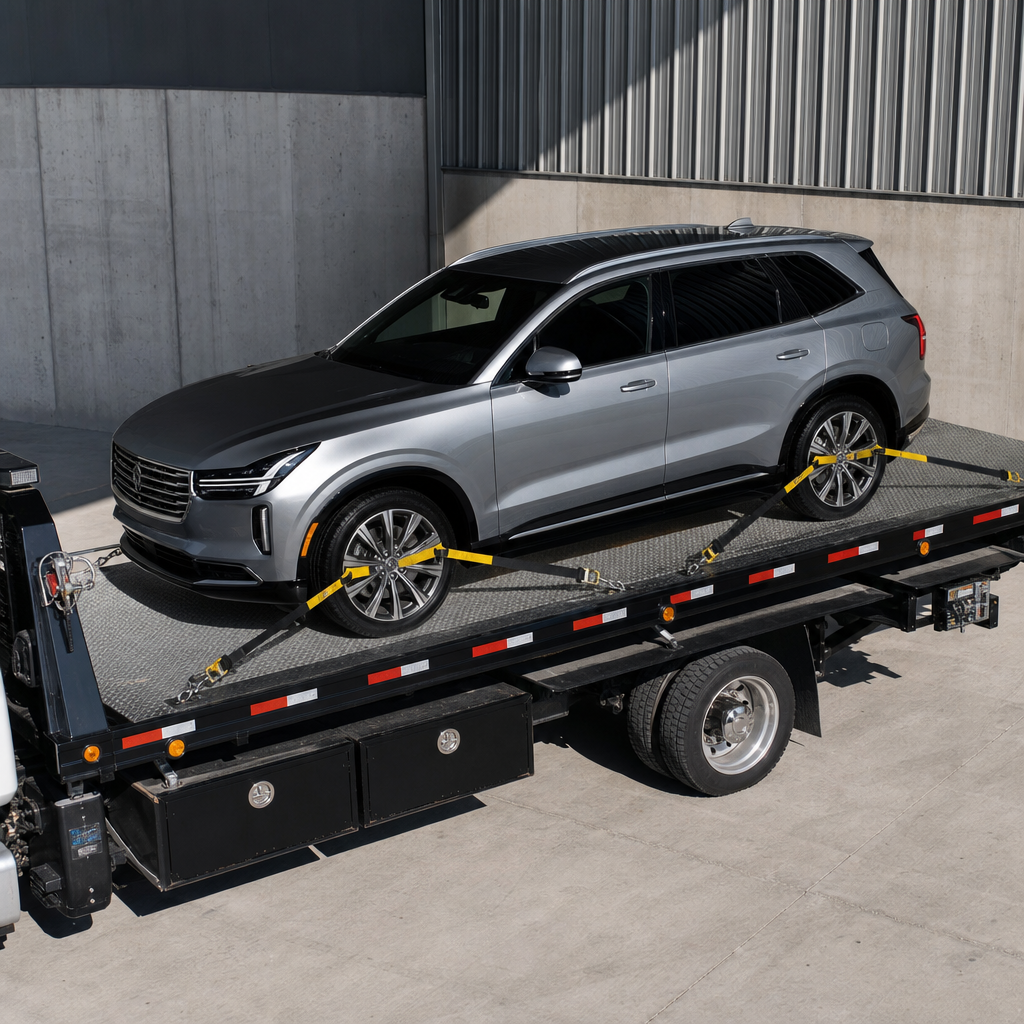
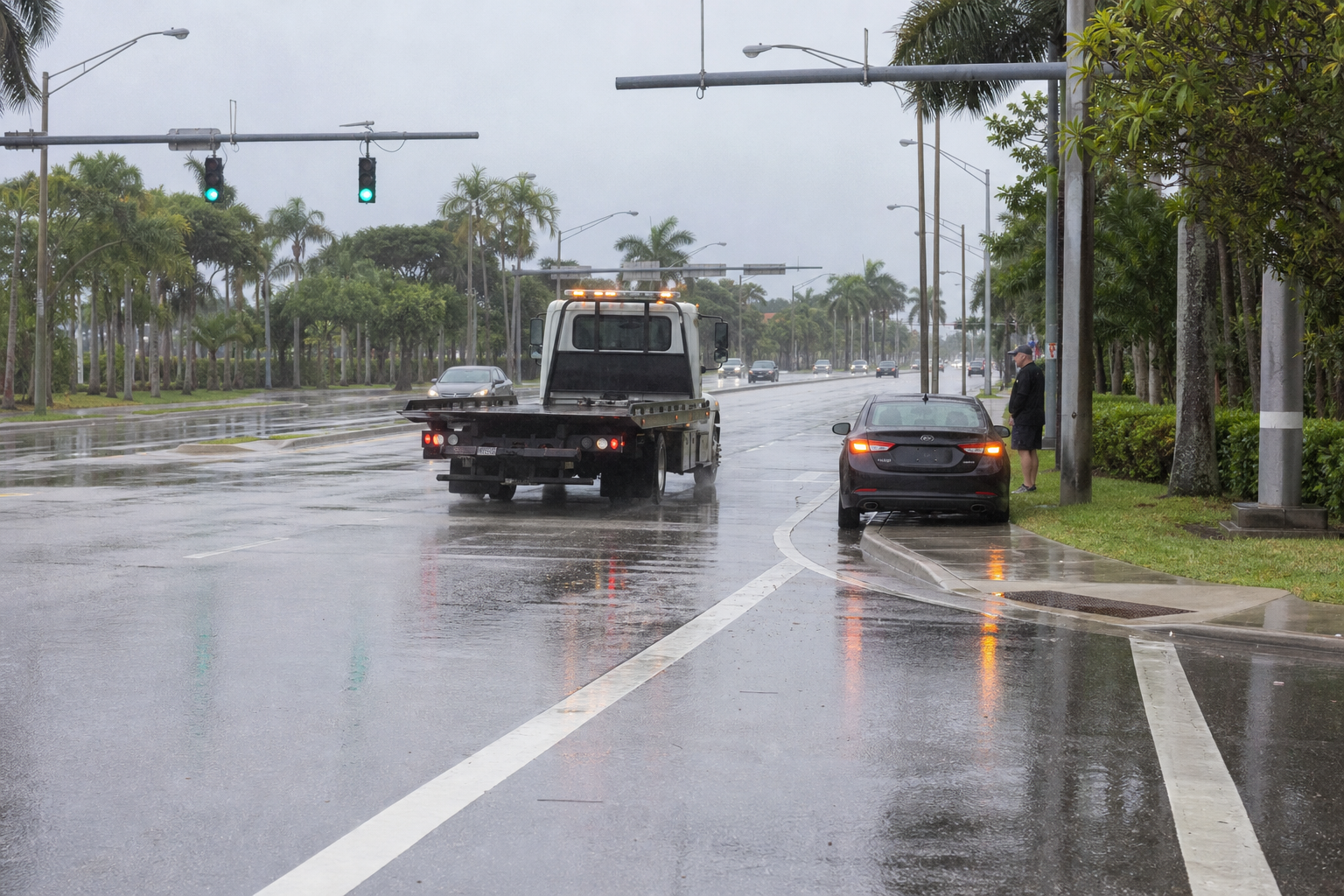
If your vehicle stops near a busy intersection, first identify whether you are before the signal, inside the intersection, or beyond it. That position determines what you should do next and what a towing dispatcher needs to know. Turn on the hazard lights, stop trying to restart the vehicle repeatedly, and move only if the car still rolls and a clearly open path leads out of traffic.
The scenario: one breakdown, three very different pickup conditions
Your engine loses power as you approach a signalized intersection in West Palm Beach. The car may stop short of the crosswalk, coast into the middle of the intersection, or make it through the signal before becoming disabled. Those few car lengths can change the entire service plan.
A vehicle before the signal may be reachable from the approach side. A vehicle inside the intersection creates an immediate exposure to crossing and turning traffic. A vehicle beyond the signal may allow room for a jump start or fuel delivery—but only if it is completely outside a moving lane.
Do not describe all three situations as simply “at the intersection.” Give the dispatcher the vehicle’s precise position so the tow truck can approach from the useful side rather than being separated from you by the signal or a line of traffic.
Match your response to where the car stopped
1. Before the signal or crosswalk
Tell the dispatcher that you are on the approach side of the intersection. Include the lane: right, center, left, or a turn lane. If the car can still roll and steer normally, and an open route leads to a parking area or another place fully outside traffic, move there cautiously. Do not reverse through traffic or cross multiple lanes to reach a preferred spot.
If the vehicle is blocking a lane, request emergency towing rather than planning an on-road diagnosis. A battery jump or fuel delivery should not be attempted where the service vehicle and technician would have to remain exposed to active traffic.
2. Inside the intersection
Say plainly: “The vehicle is disabled inside the intersection.” Add whether it is near the center, in a through path, or in the path used by turning traffic. This is not the place to open the hood, attach jumper cables, pour fuel, or push the vehicle.
If traffic is closing in, a collision appears likely, or anyone has been struck or injured, call 911. Otherwise, remain secured, keep the hazards on, and request a tow. Tell the dispatcher if the wheels are turned, the steering is locked, the transmission will not shift, or the vehicle cannot roll; those details affect how it can be loaded.
3. Beyond the signal
Describe yourself as being on the departure side—the side reached after passing through the intersection. State whether the car is still in a lane, partly on the edge, or completely inside a parking area or other protected space.
If you are fully out of traffic, the symptom may point to roadside assistance. A vehicle that will not crank after lights or accessories were left on may be a candidate for jump start service. If you are confident the tank is empty, fuel delivery may be the direct choice. If the car is partly in a lane, has wheel or steering damage, will not shift, or cannot be safely serviced where it sits, request towing instead.
Adjust for West Palm Beach heat and heavy rain
South Florida conditions matter when they change visibility or make the cabin unsafe. During heavy rain, keep the windows closed if possible, increase visibility with the vehicle’s lights, and do not walk into the intersection to read a sign. Send a map pin or read street signs from inside the vehicle. Standing water can hide the road edge, so do not assume a dark or flooded strip is a usable shoulder.
If the engine is off, air conditioning may not operate and the cabin can become hot. Tell the dispatcher immediately if a child, older adult, passenger with a medical concern, or pet is inside. Heat discomfort alone does not make stepping into active traffic safer; use the protected side only if there is a clearly safe route away from the roadway. For signs of a medical emergency, call 911.
Give the dispatcher an approach-ready location
A map pin helps, but it may not show which side of a wide intersection you occupy. Pair the pin with a short position report:
“I’m in West Palm Beach at the intersection shown on my map pin. I passed through the signal and stopped on the departure side, in the right lane. The car will not restart, the wheels roll, and two people are staying buckled inside.”
Change that wording to match the facts. Your report should cover:
- Both street names shown on the nearest signs or map
- Before, inside, or beyond the intersection
- Your lane and direction of travel, if known
- Whether any part of the vehicle remains in moving traffic
- Whether it rolls, steers, shifts into neutral, or has visible wheel damage
- The vehicle’s color, body style, and plate state
- Passengers, mobility needs, heat exposure, rain, debris, smoke, or leaking fluid
Stay available by phone. The safest approach may require the operator to confirm your exact side before entering the intersection area.
From roadside request to vehicle handoff
Before the truck arrives, gather your keys and essential belongings without unloading items into the roadway. Follow the dispatcher’s waiting instructions and do not relocate the vehicle without reporting the new position.
When the operator arrives, remain out of the space between your car and the tow truck. Explain what happened immediately before the stop and repeat anything that affects loading: locked steering, a wheel at an unusual angle, collision damage, a transmission that will not shift, or low clearance. The operator can then determine the loading method. If the vehicle needs full transport rather than an on-site service, ask about flatbed towing when discussing the vehicle’s condition.
Choose the call based on the position
- Inside the intersection or blocking a lane: Request towing now. Call 911 as well if there is an immediate collision threat, injury, fire, or smoke.
- Partly exposed beyond or before the signal: Request towing and describe the exposed side.
- Completely outside traffic with a likely dead battery: Request a jump start.
- Completely outside traffic and confidently out of fuel: Request fuel delivery.
- Unsure what failed: Describe the symptoms and location instead of guessing; the dispatcher can help select the appropriate service.
Intersection breakdown checklist
- Hazard lights on
- Vehicle in park with parking brake applied
- Position classified: before, inside, or beyond the signal
- Map pin plus street names ready
- Lane exposure reported accurately
- Smoke, injury, heat risk, rain, or leaking fluid disclosed
- Tow, jump start, or fuel delivery selected by position and symptom
- Phone kept available for approach questions
Questions drivers ask from the intersection
What if I cannot read both street signs?
Do not walk into traffic to find them. Send your phone’s map pin and report the street name you can confirm, your travel direction if known, and whether you are before, inside, or beyond the signal.
Can a jump start be performed beside the intersection?
Only when the disabled vehicle and service vehicle can be positioned outside moving traffic. If either vehicle would occupy an active lane, towing is the safer request.
Does heavy rain change what I should tell the dispatcher?
Yes. Report reduced visibility, standing water, or a road edge you cannot clearly identify. These details can affect access and where you should wait.
Should I request a flatbed immediately?
Report the vehicle type and any wheel, steering, clearance, or body damage first. The service provider can determine the suitable towing equipment from the vehicle’s condition and position.
Decision point: If any part of the vehicle remains in the traffic path, request towing and lead with the exact intersection position. If the car is fully protected off the roadway, choose jump start or fuel delivery only when the symptom clearly supports it.