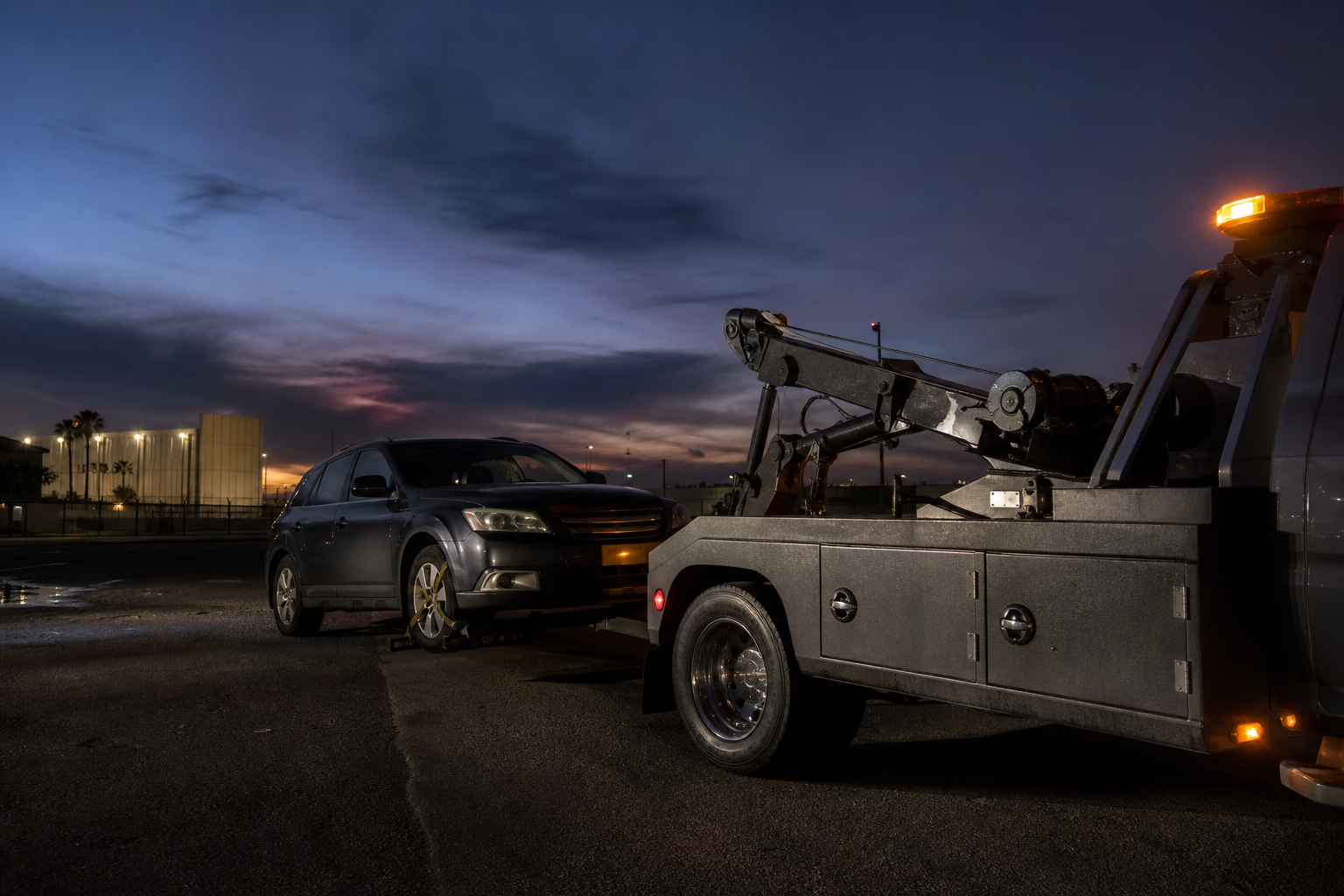
A fuel stop in West Palm Beach can put you back into Palm Beach County traffic within minutes. That short transition matters after a diesel-or-gasoline mix-up: a vehicle that has not been started may need only controlled removal and fuel-system service, while entering traffic can circulate the wrong fuel and leave you stalled in a harder-to-reach location.
If you notice the error at the pump, resist the pressure to clear the lane by starting the engine. Tell station staff that the vehicle cannot be driven, move yourself and passengers to a safe waiting position, and arrange roadside or towing help from the vehicle’s current location.
Do this before touching the start button
- Stop fueling immediately. Return the nozzle securely to the pump.
- Do not start the engine. Do not turn the key, press the start button, or cycle the ignition to test the vehicle.
- If the engine is already running, shut it off as soon as you can do so safely. Do not rev it or drive around to use up the fuel.
- Do not add more fuel to dilute the mistake. A fuel delivery cannot correct a contaminated tank.
- Call for towing or roadside guidance. State that this is a wrong-fuel incident, not an empty-tank call.
A realistic wrong-fuel scenario
You finish fueling, replace the nozzle, and then notice the grade on the receipt or pump. The vehicle still sits beside the pump and the engine has not been started. This is the best point to stop the sequence. Leave the vehicle off and call for assistance.
If you already started the engine but have not moved, shut it down. If you entered traffic before noticing unusual noise, smoke, poor acceleration, misfiring, or a warning light, do not attempt to return to the station. Pull into the nearest safe, accessible place without making abrupt movements, turn off the engine, and report the exact location where the vehicle is now stopped.
Gasoline in a diesel vehicle can reduce the lubrication expected by parts of the diesel fuel system. Diesel in a gasoline vehicle may cause difficult starting, rough operation, smoke, or stalling. The roadside decision is the same in both cases: avoid further circulation of the mixture and have the vehicle transported for proper draining and evaluation.
Choose the correct branch based on what happened
- Wrong fuel added, engine never started: Keep it off. Do not experiment with accessory mode or ignition settings. Request assistance from the pump or parking position.
- Engine started but vehicle did not move: Shut it off and disclose that the engine ran. Estimate how long it ran if you can do so without guessing.
- Vehicle was driven: Stop at the first safe accessible location. Tell the dispatcher approximately how far it traveled and describe any symptoms.
- You are uncertain which fuel was added: Treat it as a possible mix-up. Check the receipt, pump selection, fuel-door label, or owner information without restarting the vehicle.
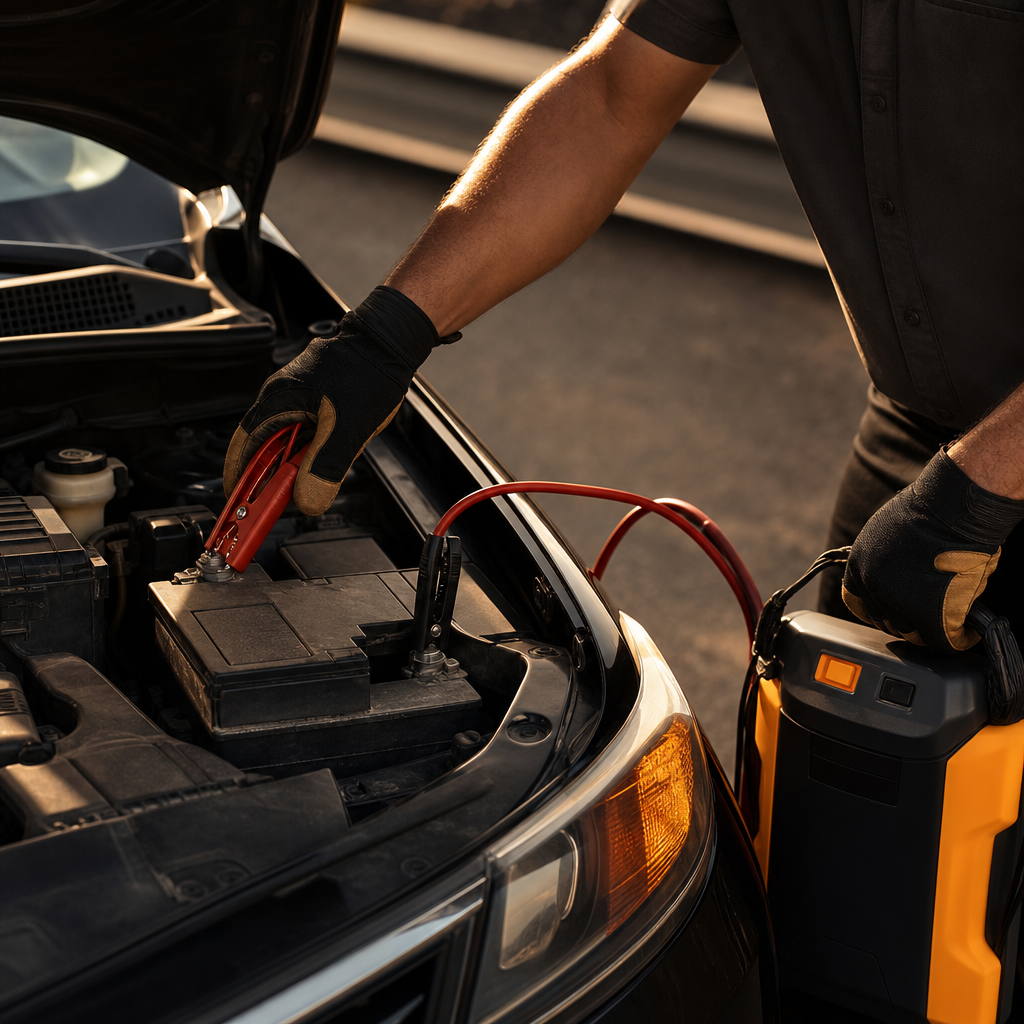
- The vehicle will not start: Do not request a jump start until the fuel issue has been ruled out. Repeated starting attempts can circulate more contaminated fuel.
Make the West Palm Beach pickup location tow-ready
Location accuracy affects how efficiently a tow operator can reach and position near the vehicle. A station name by itself may not identify the correct entrance, pump row, or side of the property. Give the dispatcher the street address shown at the site or on the receipt, then add practical access details.
Report the pump number if visible, the side of the station where the vehicle is parked, and the entrance a tow truck should use. Mention narrow lanes, overhead covers, tight turns, blocked approaches, or a vehicle queue. If station staff ask for the vehicle to be moved, explain that starting it could worsen the fuel contamination and ask where a tow truck may safely stage.
If the vehicle stopped away from the station, use a phone map pin or another precise location reference. Describe whether it is in a travel lane, parking space, driveway, shoulder, or enclosed parking area. Stay out of moving traffic and do not stand between the disabled vehicle and approaching vehicles.
What the towing dispatcher needs to know
A wrong-fuel call requires more detail than a basic disabled-vehicle request. Have this information ready:
- Vehicle year, make, model, and body style
- The fuel the vehicle normally requires
- The fuel added by mistake
- An estimated amount added, if shown on the receipt or pump
- Whether the ignition was switched on
- Whether the engine started and how long it ran
- Whether the vehicle was driven and any symptoms noticed
- Current pickup address, pump or parking position, and access restrictions
- Drivetrain information if known, including all-wheel drive
- Low clearance, modified height, locked wheels, parking-brake problems, or inability to select neutral
- The intended destination and confirmation that it can handle wrong-fuel draining or evaluation
Do not cycle the ignition simply to shift into neutral. Some vehicles have specific loading procedures, and some may activate fuel-system components before the engine starts. Tell the dispatcher if the vehicle cannot be placed in neutral without ignition power. Flatbed towing may be appropriate when rolling or drivetrain concerns make road contact undesirable, but the operator needs the vehicle details and access conditions to plan the pickup.
Prepare for a clean service handoff
Before the tow arrives, choose a destination that has agreed to receive the vehicle and address contaminated fuel. Confirm its location and receiving availability directly. The towing handoff transports the vehicle; it does not replace fuel-system draining, inspection, or repair decisions at the destination.
Keep the key available, remove essential personal items, and save the fuel receipt if you have it. Tell the operator exactly what occurred rather than relying on a note such as “won’t start.” Disclose every ignition attempt and any distance driven. That information helps the receiving facility evaluate the exposure without assuming the tank contents never circulated.
If you need help at any hour, request emergency towing for a wrong-fuel vehicle and remain in a safe waiting area. Do not attempt to siphon the tank, disconnect fuel lines, crawl under the vehicle, or push it through an active fueling area.
Wrong-fuel pickup checklist
- Fueling stopped and nozzle returned
- Engine and ignition kept off
- Passengers waiting away from vehicle movement
- Receipt or estimated fuel amount available
- Exact West Palm Beach or Palm Beach County pickup location confirmed
- Pump number, entrance, clearance, and staging details reported
- Vehicle specifications and drivetrain shared
- Destination contacted and ready to receive the vehicle
- Keys and contact phone kept accessible
Frequently asked questions
Can I drive a short distance after putting in the wrong fuel?
No. A short drive still circulates the mixture and can turn a pump-side problem into a roadside stall. Keep the engine off or stop at the nearest safe accessible location if you are already moving.
Will topping off the tank with the correct fuel fix it?
Do not try to dilute the wrong fuel. The mixture remains in the tank and may enter the fuel system. Arrange transport for proper draining and evaluation.
Should I try starting the vehicle to see if it runs normally?
No. Starting or repeatedly cranking the engine can move contaminated fuel farther through the system. Report that the engine has not been started and leave it that way.
Do I need a flatbed tow?
That depends on the vehicle, drivetrain, wheel condition, clearance, loading access, and manufacturer procedures. Give the dispatcher complete vehicle information so suitable towing equipment can be selected.
When should I call for help?
Call as soon as you confirm or strongly suspect a diesel-or-gasoline mix-up. If the vehicle is exposed to moving traffic or another immediate hazard, move yourself and passengers to a safer position first, then request towing with an exact location and access description.
Safety-first next step: Leave the ignition off, gather the receipt and vehicle details, and call for towing from the vehicle’s actual location. Accurate fuel, access, and destination information gives the dispatcher what is needed to plan a safer handoff.