
Use this rule first: rapid clicking plus weak or fading lights usually points toward low battery power or a poor battery connection; one solid click with normal bright lights can point toward a starter, relay, cable, or connection issue. If the car is in an unsafe position, blocked in, or cannot be reached safely for a jump, skip diagnosis and request help.
60-second sound-and-light check
- Put the vehicle in Park, set the parking brake, and turn off climate controls, audio, chargers, and other accessories.
- Try one normal start attempt while watching the dashboard and interior lights.
- Stop after that attempt. Note the sound: rapid repeated clicks, one heavy click, or silence.
- Do not keep turning the key or pressing the start button. More attempts can drain an already weak battery further without identifying the cause.
Before the problem: know the warning pattern
A clicking no-start can sound simple, but the sound alone does not prove that the battery is bad. The click may come from a relay, starter solenoid, starter circuit, battery cable, terminal connection, or a battery that cannot supply enough current. The useful question is not “Is it clicking?” It is “What changes when I try to start it?”
| What you notice | What it can suggest | Best next decision |
|---|---|---|
| Fast clicking; dashboard or cabin lights dim sharply | Low battery charge, loose/corroded connection, or a battery unable to deliver enough current | A jump-start assessment is a reasonable first roadside option if the vehicle is safely accessible. |
| One pronounced click; lights stay bright; engine does not crank | Starter, relay, solenoid, cable, or connection issue | A jump may not solve it. Request roadside help if you need an on-site check; request a tow if the vehicle still will not crank. |
| Clicks after the car has sat, followed by a start after a jump | The battery may be discharged, but the reason it discharged is still unresolved | Drive only if the vehicle starts and operates normally; arrange follow-up diagnosis soon. |
| No click, no crank, and little or no dash power | Severely discharged battery, disconnected connection, or an electrical issue | Roadside battery assistance or a tow is safer than repeated attempts. |
Do not touch battery terminals if there is leaking fluid, heavy corrosion, a cracked case, smoke, a burning odor, or unusual heat around the battery area. Those are tow-first conditions.
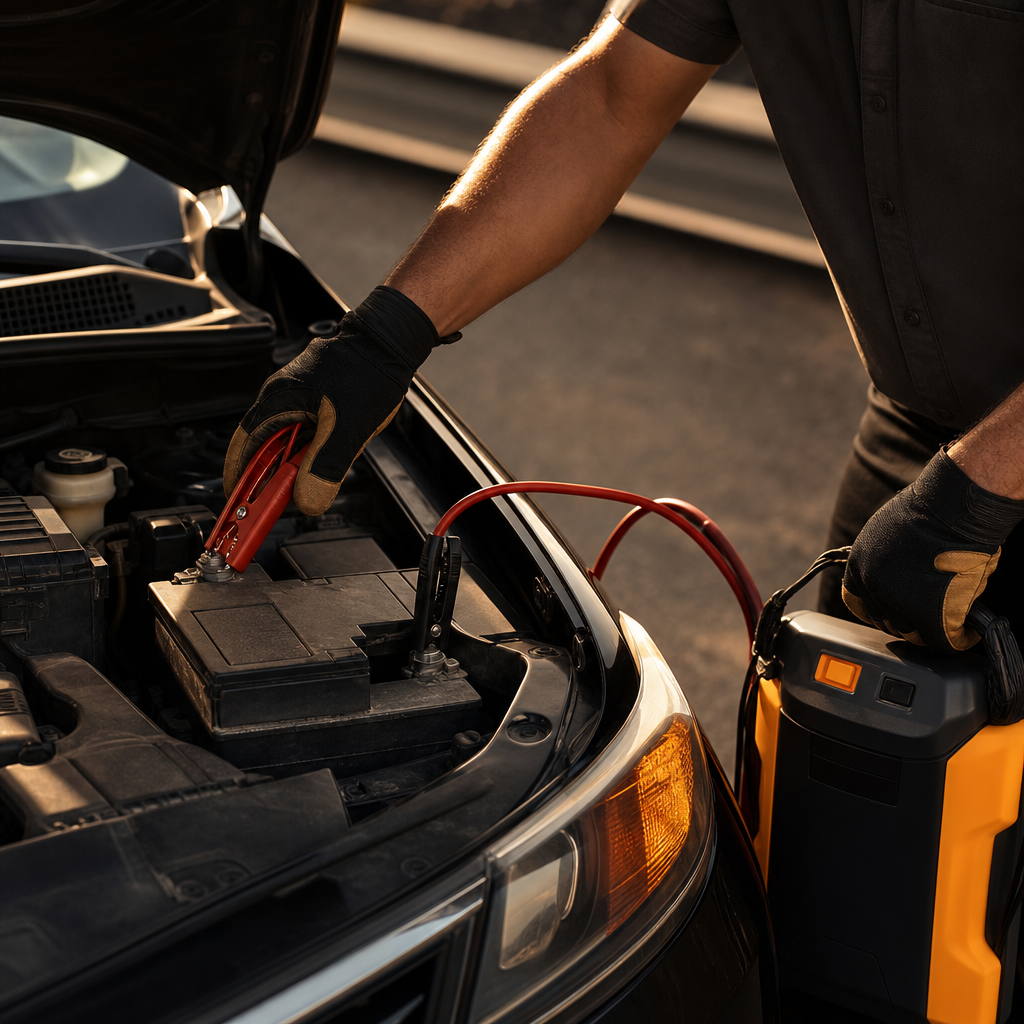
For a routine weak-battery pattern, jump start service may get the vehicle running. It is not a guarantee that the battery, charging system, or connections are healthy afterward.
At the roadside: make the call based on access, not optimism
In West Palm Beach and elsewhere in Palm Beach County, a no-start becomes more complicated when the car is parked where service vehicles have limited room to approach. A parking garage, valet lane, gated lot, narrow drive aisle, or space between closely parked vehicles can affect what roadside help can safely do.
Before arranging service, look at the vehicle’s position from a practical access standpoint:
- Can the hood open fully? A jump-start attempt may be impractical if another vehicle, wall, or overhead obstruction prevents safe access.
- Can a service vehicle reach the car? In a garage, know the level, section, entry route, clearance restrictions posted at the entrance, and whether the vehicle is facing in or out.
- Is the car creating a hazard? If it is obstructing a lane, garage ramp, driveway, or active loading area, prioritize moving the situation toward professional handling rather than repeated troubleshooting.
- Can it be loaded if it does not start? A vehicle that will not crank may need towing rather than another jump attempt, especially after normal lights remain bright and the same single click continues.
Do not push a vehicle through a garage, across a travel lane, or into a better-looking space just to make service easier. If it cannot be started safely, explain its exact position when requesting help.
Choose the service that matches the symptom
- Choose a jump start when rapid clicking, dimming lights, or a long period of sitting points to low battery power and the vehicle is accessible.
- Choose a tow when there is one repeated heavy click with bright lights, visible battery damage, smoke or odor, a no-crank condition after a proper jump attempt, or constrained access that makes roadside work unsuitable.
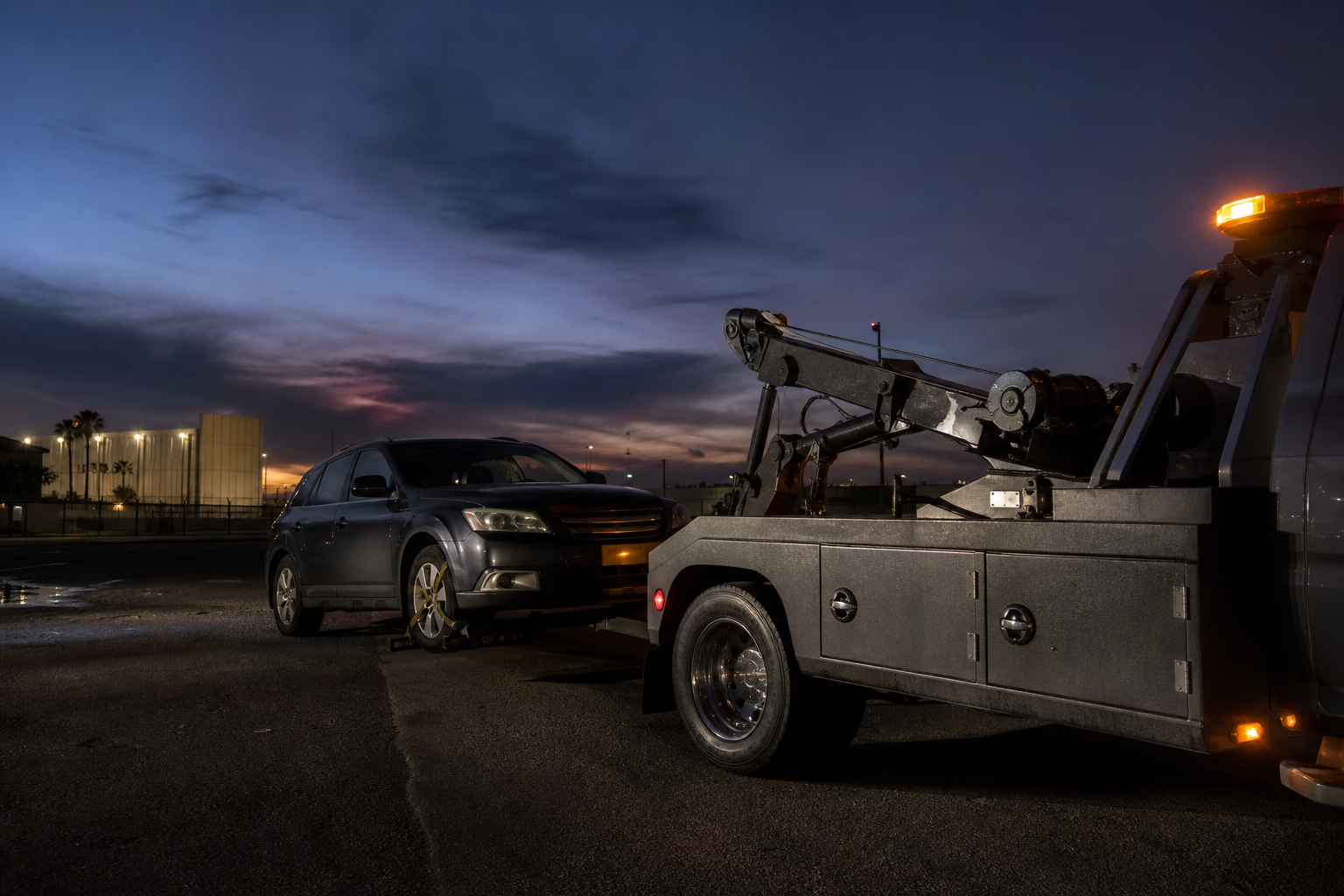
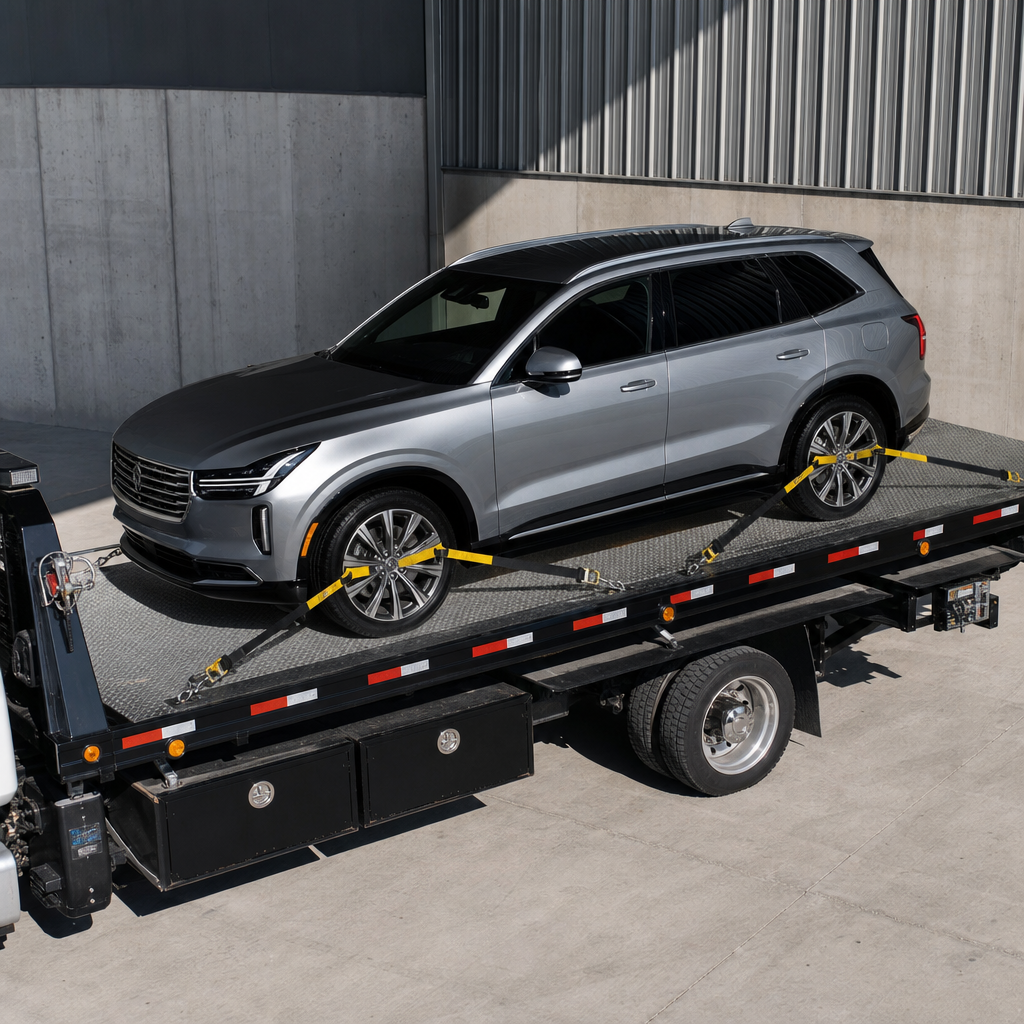
- Choose flatbed towing when the vehicle needs to be transported and you want it carried rather than driven. Flatbed towing is a practical option for a vehicle that remains unable to start.
A fuel issue usually produces a different pattern: the engine commonly cranks normally but does not start. If your engine is only clicking and not cranking, fuel delivery is not the primary branch to pursue.
While waiting: preserve the clues that help the technician
You do not need to diagnose the car. Your job is to keep the scene safe and preserve a clear description of what happened.
Roadside waiting checklist
- Keep the key or key fob with you and leave the vehicle secured if you are stepping away from it.
- Turn off accessories so a weak battery is not drained further.
- Take a quick photo of the parking position, garage level or section marker, and nearby access point if the vehicle is in a constrained area.
- Write down the exact sequence: “rapid clicks and lights dimmed,” “one click with bright lights,” or “started after a jump, then stalled later.”
- Have the vehicle make, model, color, and current location ready, along with any access instructions needed to reach the car.
- Stay out of traffic paths, ramps, and blind corners. If waiting inside the car is unsafe, move to a safer nearby location while remaining available.
Avoid improvised jump-starting if you are unsure where connection points are, the battery is damaged, cables are compromised, or traffic and garage conditions leave little working room. Incorrect connections can create additional electrical damage or injury risk.
After service arrives: use the outcome to decide what happens next
If a jump start works, listen and watch before treating the matter as finished. A successful start means the engine is running; it does not identify why battery power was low. Tell the technician if the vehicle recently needed another jump, if warning lights appeared, or if the clicking started suddenly without a long period of sitting.
If the vehicle starts but dies, warning lights remain on, or it will not restart after being shut off, choose transport rather than risk being stranded again in a less convenient position. Emergency towing can be the better decision when the vehicle cannot reliably remain running.
If it does not start after roadside assistance, do not keep cycling the ignition in hopes that the sound will change. Ask for a tow and provide the destination details you want used. For a vehicle in a garage or other limited-access setting, confirm that the dispatcher understands the access constraints before a truck is sent.
Make the next call from the symptom
Rapid clicks with dim lights and safe access: request a jump start. One click, bright lights, battery damage, no-start after a jump, or difficult garage access: request a tow. Towing By Me serves drivers in West Palm Beach and Palm Beach County who need roadside assistance or vehicle transport after a no-start.
Clicking no-start questions drivers ask
Can a bad battery make just one click?
Yes. Battery and connection problems can produce different sounds depending on available power and the vehicle’s electrical system. One click is not enough to confirm a starter failure; the brightness of the lights and whether the engine cranks provide more useful context.
Should I keep trying to start the car if it clicks?
No. One observation attempt is usually enough to identify the sound pattern. Repeated attempts may draw down a weak battery further and do not reliably distinguish a battery issue from a starter or connection issue.
If a jump start works, can I assume the problem is fixed?
No. The jump may restore enough power to start the engine, but the underlying cause could involve battery condition, battery connections, or charging performance. If the issue repeats, arrange diagnosis rather than relying on repeated jumps.
What should I tell a towing dispatcher if my car is in a parking garage?
Provide the garage level, entry point, any posted clearance information, the vehicle’s orientation, whether the hood can open, and whether the car blocks an aisle or ramp. Those details help determine the safest service approach.